
Crane rail cleaning is often less about sweeping away loose dust than removing the oil film and stubborn residue left behind. On overhead and gantry cranes, oil, water, dust and small debris may be present on the same rail. Some material rests loosely on the rail head; some forms a firmly attached layer. A single cleaning method may not address both.
Hard particles entering the wheel–rail contact area can damage the running surfaces. The immediate purpose of cleaning is to reduce the material left in the wheel path. What remains on the rail determines whether manual cleaning is needed and which cleaning elements a crane rail sweeper should use.
Why Does the Rail Still Look Dirty After Brushing?
A brush may leave the rail looking cleaner without removing all the contamination. Once loose particles have been swept away, an oily layer may remain underneath. Fine particles mixed with oil can also form deposits that ordinary brushing struggles to remove.
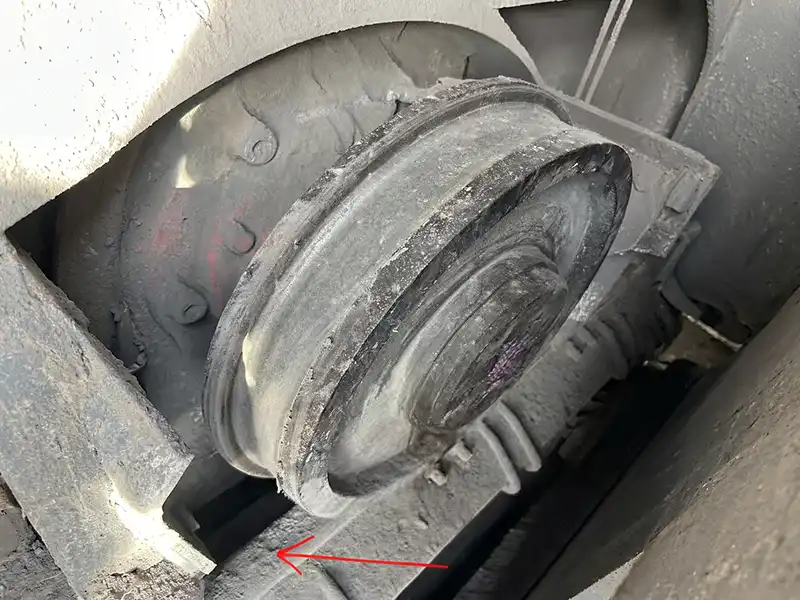
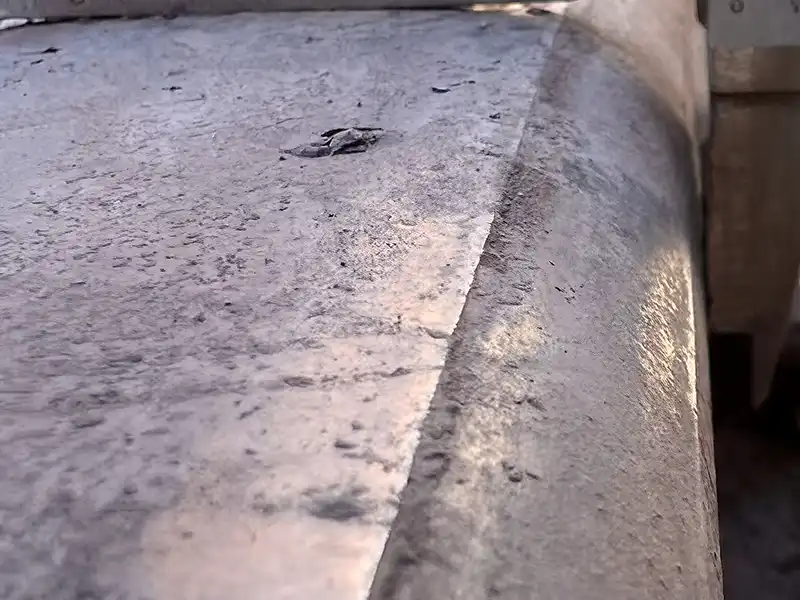
Inspection should therefore go beyond checking for visible debris. Look at the condition of the residue:
- Loose particles without significant adhesion call for sweeping.
- Oil films and water require wiping or absorbent cleaning media.
- Oil mixed with fine debris requires an assembly that handles both liquid and solid contamination.
- Compacted or firmly attached deposits need assessment before a cleaning method is selected.
Stubborn dirt is sometimes described as looking “baked onto” the rail. That description conveys the cleaning difficulty, but it does not establish the deposit’s composition or how it formed. More useful questions are what remains after routine brushing and whether the proposed cleaning media can remove it.
Match the Cleaning Method to the Contamination
Cleaning materials perform different jobs. Felt absorbs and wipes; brushes sweep away particles. Firmly attached deposits may require another cleaning element or separate initial treatment.
| Rail condition | Cleaning priority | Configuration to consider |
|---|---|---|
| Loose dust and small debris | Sweep particles off the running surface | Brush |
| Water and surface oil | Absorb and wipe away liquid contamination | Felt or a composite wiping assembly |
| Oil mixed with fine particles | Remove both liquid and solid residue | Felt and brush combination |
| Stubborn adhered deposits | Assess adhesion and establish a suitable removal method | Dedicated initial cleaning or a tested combination of cleaning elements |
Oil and Water: Check What Remains After Wiping
Felt is used to absorb and wipe oil and water from the rail surface. The standard DLQS-1800 cleaning pad combines felt with a nonwoven abrasive pad and is secured beneath a removable base for replacement.
Where the rail carries particles as well as oil, a brush can work alongside the felt rather than leaving the wiping material to handle everything.
Check the surface after the assembly has passed. A continuous oil film, visible particles or an unevenly cleaned strip can indicate that the result needs closer examination. Also check whether the cleaning media maintains effective contact with the rail.
If oil returns soon after cleaning, investigate its source. Removing oil from the running surface does not replace repair of a leak.
Adhered Dirt: More Brushing Is Not Always the Answer
Repeated passes with the same brush may do little against compacted or firmly attached dirt. In that situation, the cleaning action needs to change—not simply the cleaning frequency.
The DLQS-1800 can be configured with felt, brushes and steel-wire brushes to suit the application. A steel-wire-brush arrangement should be assessed against the deposit, rail condition and intended contact. It is not a universal specification for every crane rail.
When the deposit is difficult to identify, a cleaning trial on a representative section can help establish the next step. Inspect the result: has the deposit been removed, has only the top layer become thinner, or does firmly attached material remain? These observations provide a better basis for selection than photographs alone.
Remove Existing Buildup Before Controlling New Contamination
Heavy existing deposits and contamination arriving during normal operation are different maintenance tasks.
Established buildup may need dedicated cleaning during a safe shutdown. Once the crane returns to service, ongoing cleaning can address new contamination before it remains on the running surface for an extended period.
Manual work must follow the site’s approved shutdown, isolation and maintenance procedures. Tools and cleaning agents should be checked for suitability before use. Before the crane returns to operation, inspect the rail for tools, cleaning materials and other items left behind.
The exposed surface also needs examination. Remaining contamination must be distinguished from wear, indentations or other rail damage. Cleaning removes deposits; it cannot restore a damaged running surface.
If the rail stays clean for a reasonable maintenance interval, periodic cleaning may be sufficient. If oil, water and debris return throughout normal operation, a travel-mounted sweeper offers a way to clean between scheduled maintenance tasks.
How a Rail Sweeper Cleans During Crane Travel
A rail sweeper mounts near the crane end beam, with its cleaning elements in contact with the rail running surface. Crane movement carries the assembly along the track, allowing it to wipe and brush repeatedly.
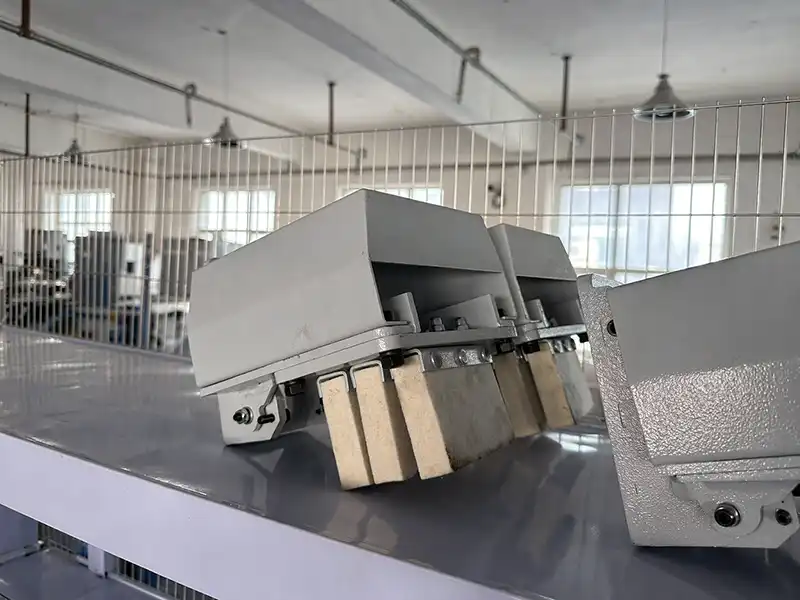
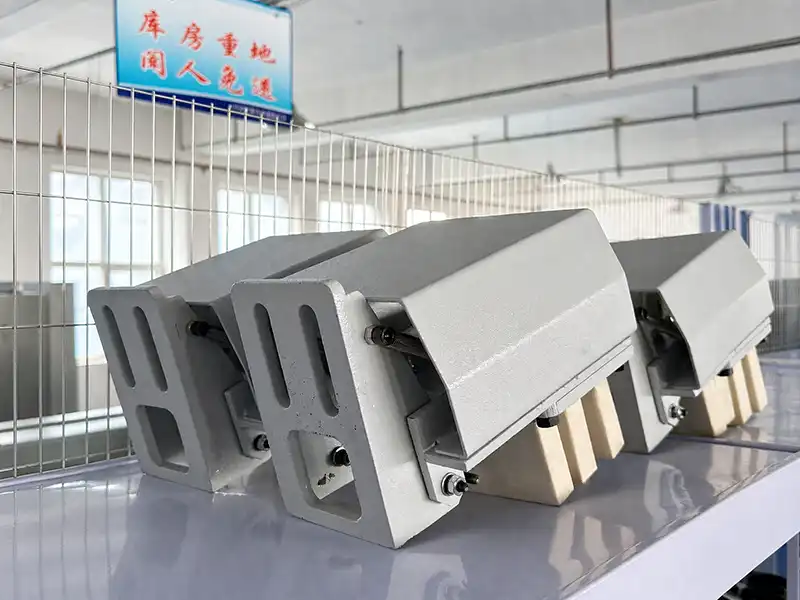
Its value lies in that repeated action. Instead of waiting for the next manual clean, the assembly addresses contamination reaching the rail during operation.
Performance depends on the mounting arrangement as well as the cleaning media. The elements must cover the intended area and remain in a suitable working position.
On the DLQS-1800, a hinged arm connects to the mounting plate, with a buffer spring between the plate and arm. The arm allows movement within the assembly’s designed range, while the spring cushions changes in contact during travel.
As the felt wears, the assembly’s position changes and its front end may tilt downward. A limiting post and matching opening restrict arm movement to help prevent the cleaning-pad base from contacting the rail. The limit controls movement; timely replacement of the cleaning media maintains the working condition.
Reversing travel also affects the layout. An assembly ahead of a wheel in one direction may be behind it in the other. The number and position of cleaning assemblies must therefore be checked against wheel locations and both travel directions. Finding space for a bracket is only one part of the installation.
What Should Be Checked Before Installation?
Useful starting information includes the rail profile or rail-head width, close-up photographs of the contamination, and photographs showing the end beam and surrounding wheel area. Dimensions of the proposed mounting area help establish bracket position, clearance for movement and maintenance access.
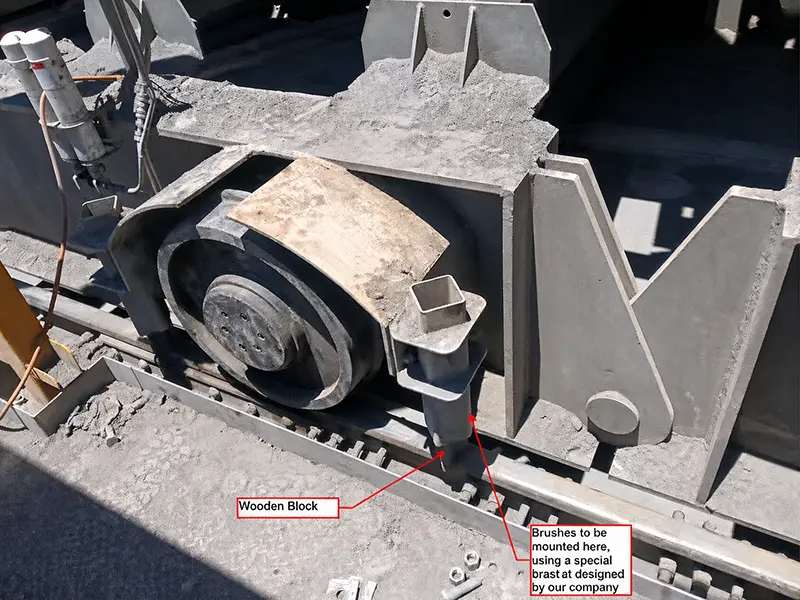
Access deserves particular attention. Cleaning media wears in service, and an assembly that is difficult to reach or dismantle creates an avoidable maintenance burden. A removable base and replaceable cleaning elements are most useful when there is enough room to service them.
Once the sweeper is operating, routine checks should cover:
- Residue left on the rail after the cleaning assembly passes.
- Uneven wear or loss of effective contact at the felt or brushes.
- The condition and movement of the arm, spring and limiting components.
- Mounting fasteners and the protective cover.
Replacement should follow the observed condition rather than a fixed calendar interval alone. If cleaning performance declines, first determine whether the cause is worn media, a change in contact position or contamination beyond the original configuration’s capability.
Reduce Contamination-Related Wear Without Overlooking Mechanical Problems
Removing hard debris from the wheel’s running path reduces the likelihood of it becoming trapped in the wheel-rail contact area or being crushed by the wheel. This is the direct benefit of track cleaning for wheel protection.
However, wheel wear is also related to wheel alignment, wheel-rail condition, load, and operating conditions. If abnormal wear persists after track cleaning, mechanical causes should be investigated further, rather than simply increasing brush pressure or replacing the cleaning material with a stronger one.
A practical crane rail cleaning solution should integrate contamination identification, initial cleaning, and ongoing maintenance. Glory Rail can evaluate the combination of felt, bristle brushes, and wire brushes for the DLQS-1800 based on rail contamination levels and end beam installation conditions, and provide simple installation drawings with the shipment according to the confirmed layout. Only when cleaning components are matched to actual contamination and are easy to inspect and replace after installation can continuous cleaning truly become an integral part of a crane’s routine maintenance.