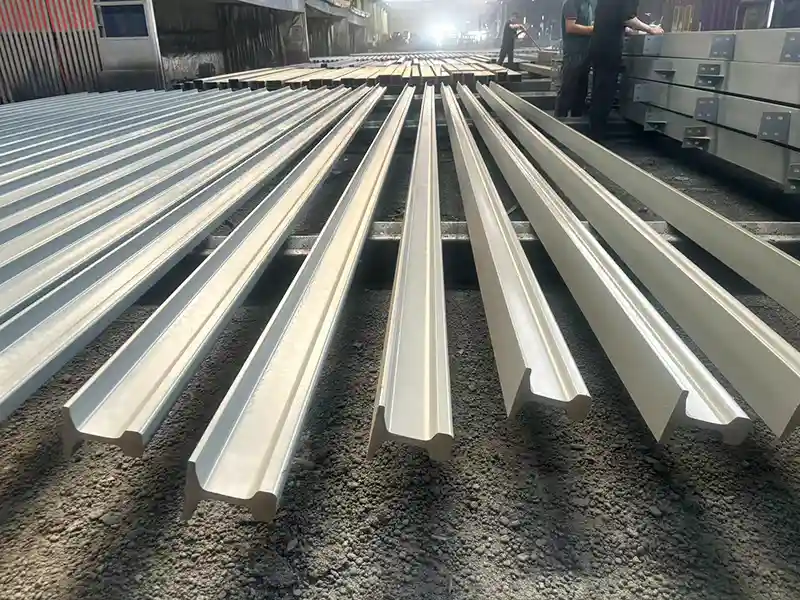
Rail Anti-Corrosion Coating Solutions for Industrial Rails
Engineered blasting and multi-layer coating systems for industrial rails in the world’s harshest environments — from iron ore mines to coastal ports. ISO 12944 compliant, fully traceable, and built for 15+ years of service life.
In many industrial environments, rail systems are expected to last for years—yet premature failures are more common than expected.
The problem is often not the rail itself, but inadequate or incorrect corrosion protection.
Accelerated corrosion reduces rail lifespan and increases replacement frequency
Inadequate coating systems lead to repeated maintenance and unexpected downtime
Improper protection methods may compromise structural reliability over time
Difficult repairs in harsh environments increase long-term operational costs
At Glory Rail, we help industrial clients identify these risks early and provide tailored anti-corrosion coating solutions based on real application conditions.
Surface Preparation: The Foundation of Coating Performance
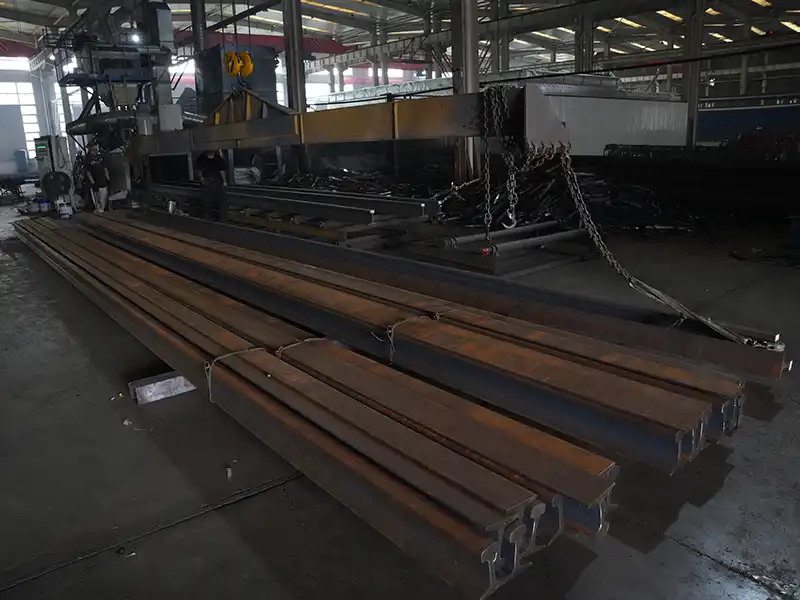
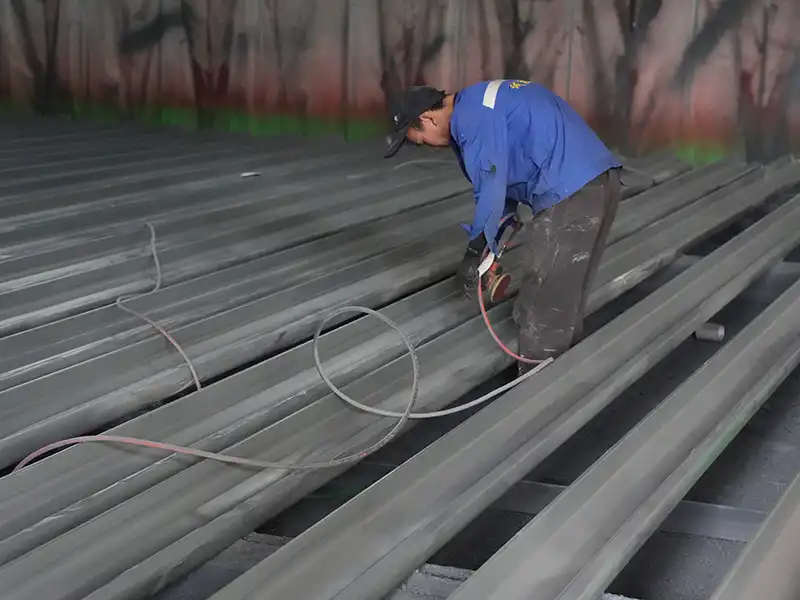
Before applying any coating, rail surfaces must undergo abrasive blasting (sandblasting / shot blasting). The purpose is to:
Remove mill scale, rust, old coatings, and contaminants
Create a controlled surface roughness
Improve mechanical adhesion between coating and steel
Blasting Cleanliness Standards
Grade
Description
Typical Application
Sa1 – Light Cleaning
Removes only loose rust and scale; surface still shows visible contamination.
Temporary or low-demand protection
Sa2 – Industrial Cleaning
Removes most visible rust and coatings; slight staining may remain.
General steel structures
Sa2.5 – Near White Metal
Removes nearly all rust and scale; only slight discoloration allowed; uniform metallic surface.
Heavy-duty anti-corrosion systems, C4–C5 environments (ISO 12944)
Sa3 – White Metal
Complete removal of all contaminants; pure metallic surface with bright appearance.
Extreme environments / thermal spray coatings
Corrosion Environment Classification (ISO 12944)
Every coating system begins with identifying the correct corrosivity category. ISO 12944 defines six atmospheric classes plus three immersion classes, guiding material selection and minimum dry film thickness (DFT).
C1 — Very Low
Heated Indoor Spaces
Offices, shops, climate-controlled storage. Minimal corrosion risk; basic primer sufficient.
C2 — Low
Rural / Low Pollution
Unheated interiors, rural atmospheres with low SO₂. Light atmospheric corrosion.
Our five-phase process covers everything from initial surface preparation through final packaging — every step documented, every layer tested, every rail traceable.
Remove mill scale, rust, and contaminants; create controlled surface roughness for coating adhesion.
Surface preparation is the single most critical factor in coating performance — accounting for up to 60% of a coating system’s long-term adhesion. We follow ISO 8501-1 Sa2.5 (Near-White Metal Blast Cleaning) as our minimum standard for all industrial rail coating projects.
Step 1.1
Pre-Blast Preparation
Surface inspection and degreasing. Oil, grease, and visible contaminants are removed with solvent cleaners before abrasive blasting begins.
Step 1.2
Shot Blasting Execution
Steel shot/grit blasting at 0.4–0.8 MPa, nozzle angle 45°–75°, distance 100–300 mm. Achieves uniform metallic surface with controlled anchor profile.
Step 1.3
Blasted Surface Inspection
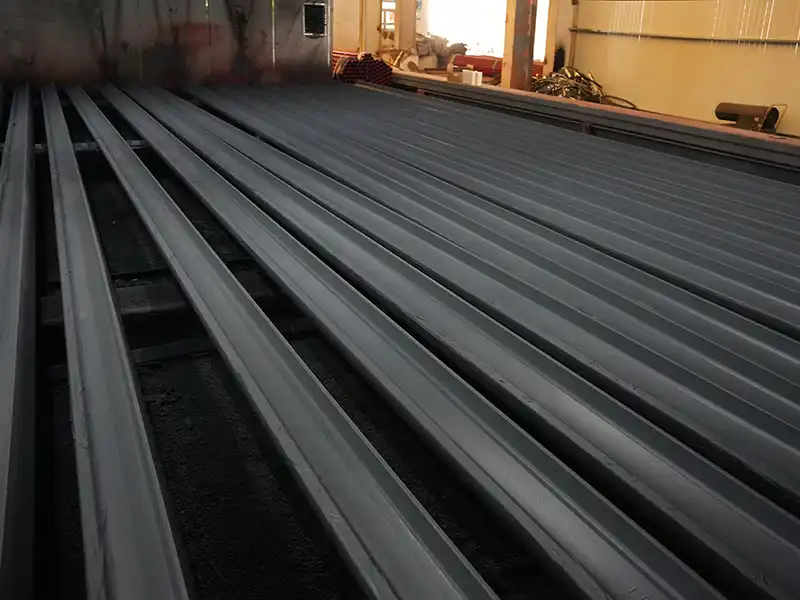
Visual comparison against ISO 8501-1 reference specimens. Uniform near-white metallic surface with no visible rust, scale, or staining.
Step 1.4
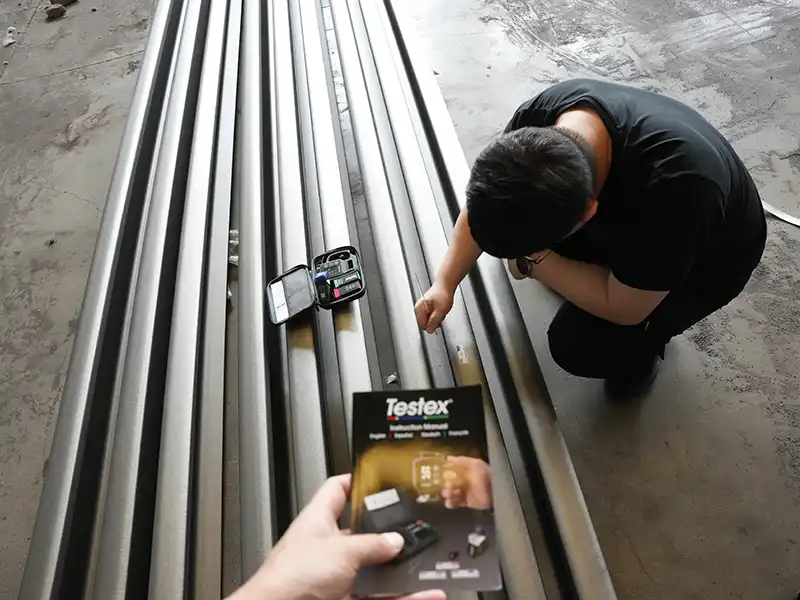
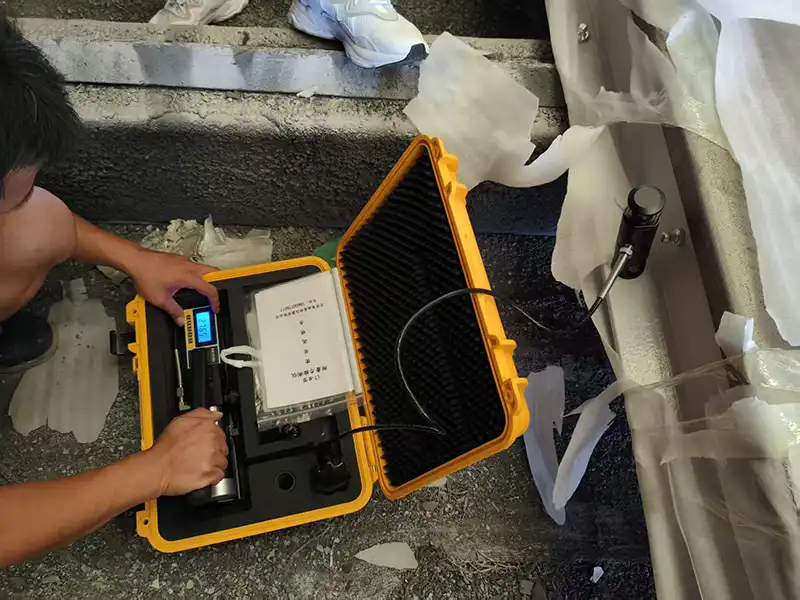
Surface Roughness Measurement
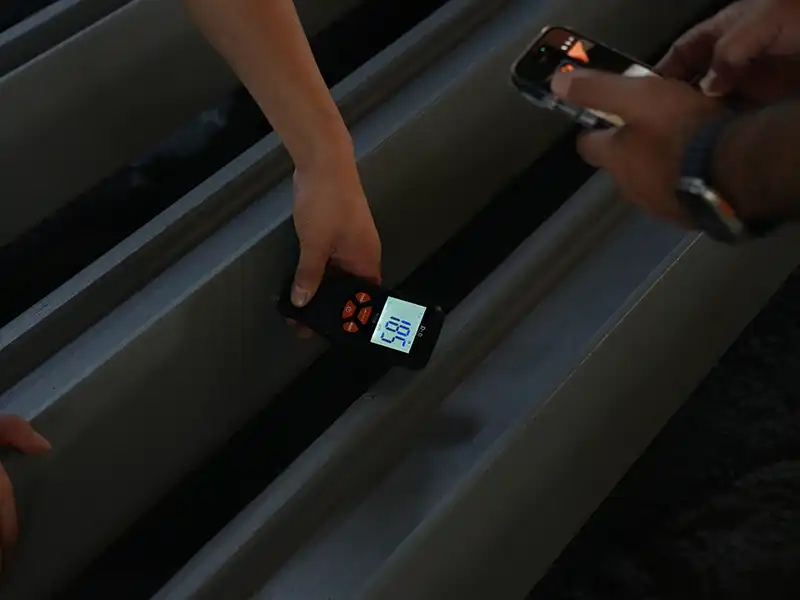
Profilometer measurement of surface profile. Target Ra 25–50 μm ensures optimal mechanical interlocking between substrate and primer.
Step 1.5
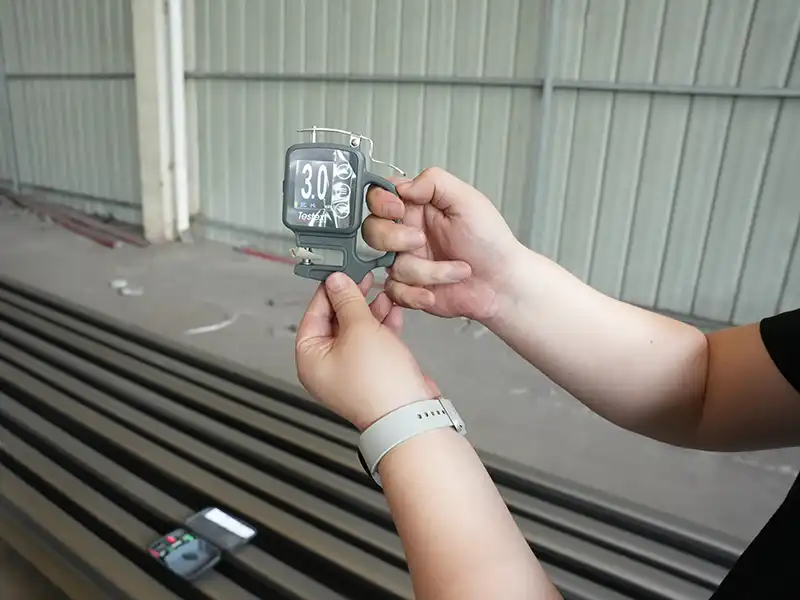
Roughness Data Verification
Digital roughness tester displays Ra, Rz, and Rmax values. Results are recorded and must fall within specified range before coating proceeds.
Step 1.6
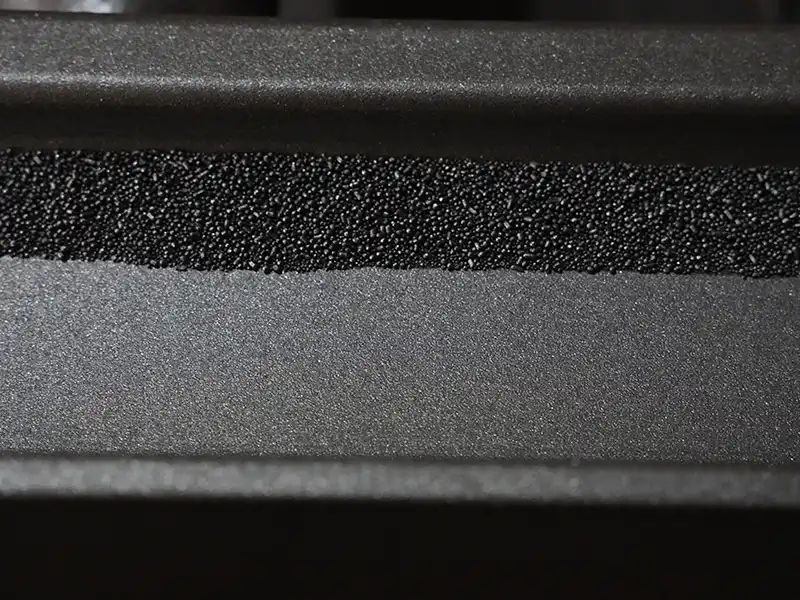
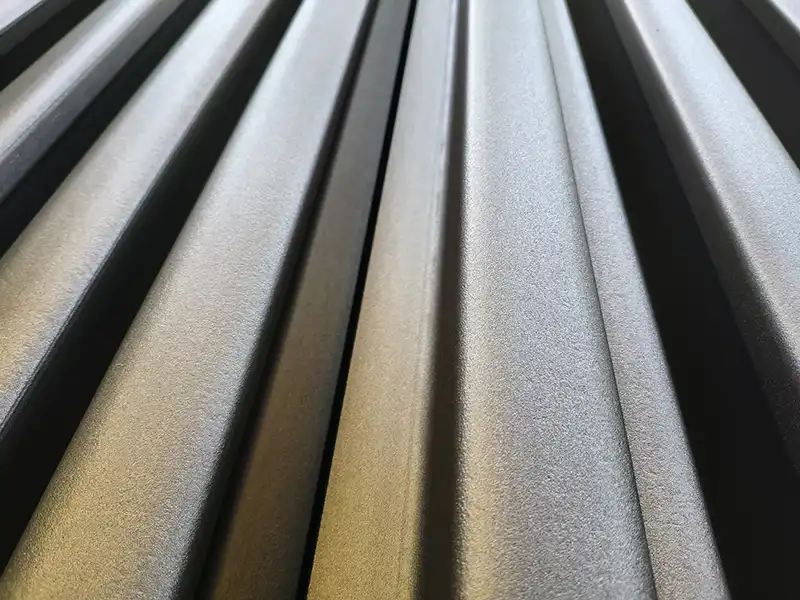
Anchor Profile Verification
Close-up inspection of the blasted surface texture. The uniform micro-roughness provides the mechanical “key” that locks the primer to the steel.
2. Masking & Critical Area Protection
Protect the rail running surface and all areas that must remain uncoated.
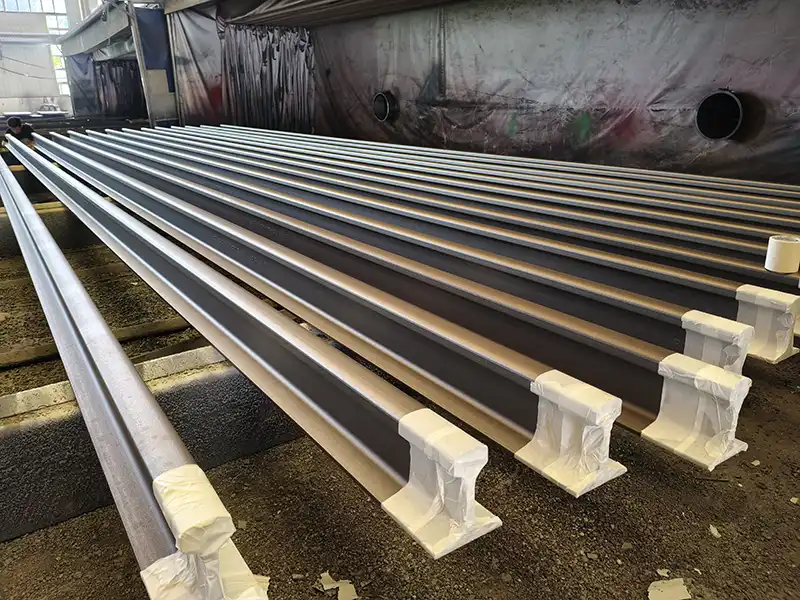
The rail running surface (tread) must remain bare to preserve wheel-rail friction and braking performance. We also mask welding zones, bolt holes, and identification marks. A 30 mm uncoated zone on the rail head is standard.
Step 2.1
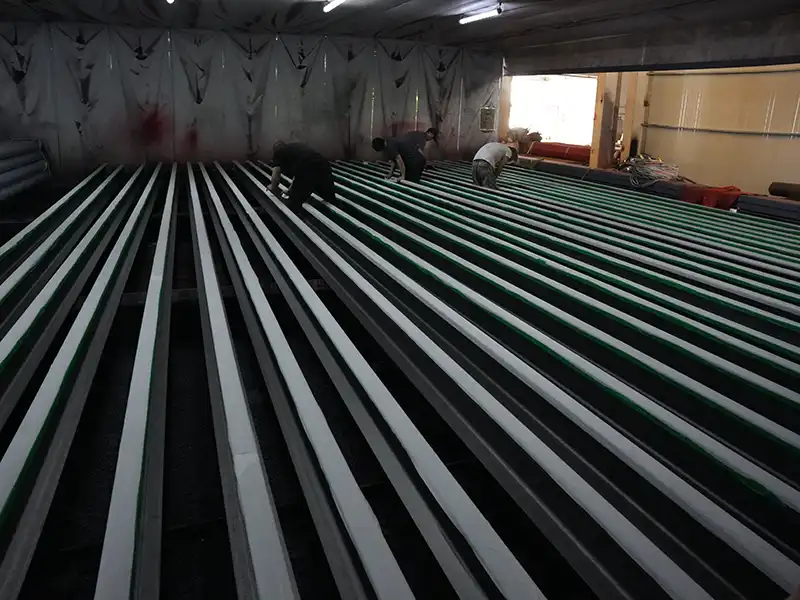
Running Surface Taping
Protective paper tape is applied along the full length of the rail tread. This prevents any coating from reaching the wheel contact zone.
Step 2.2
Full Area Masking
End faces, bolt holes, fishplate contact surfaces, and weld preparation zones are masked with tape or caps to ensure clean, coating-free interfaces.
3. Three-Layer Coating Application
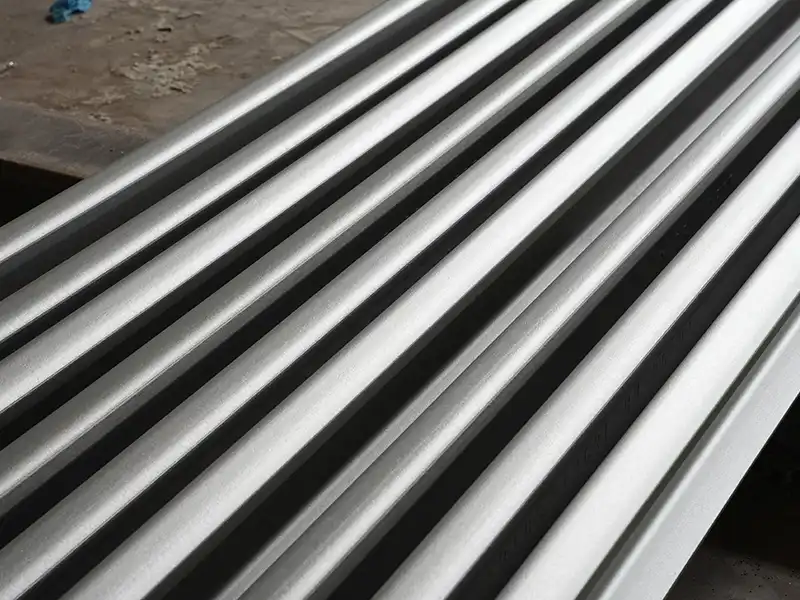
Zinc-rich epoxy primer → MIO intermediate coat → Polyurethane topcoat, with inter-layer inspection.
Step 3.1
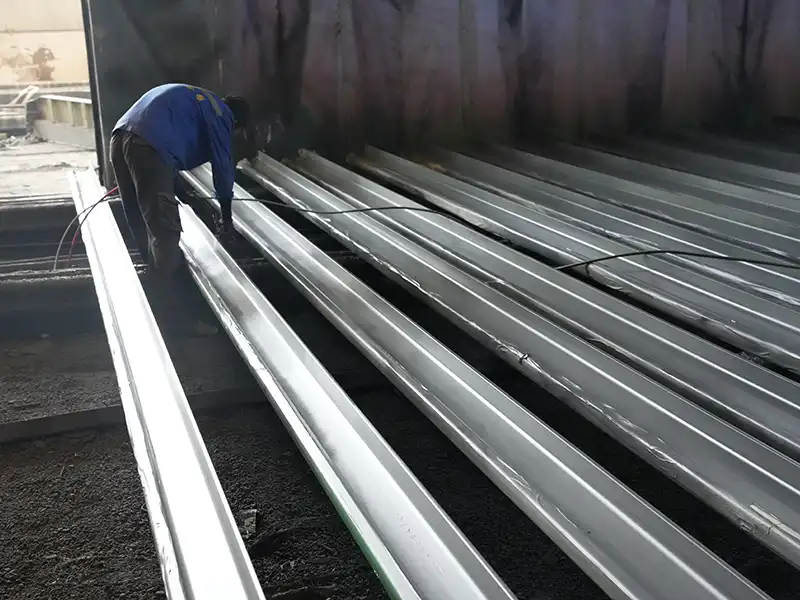
Zinc-Rich Epoxy Primer
High-pressure airless spray of zinc-rich epoxy primer (zinc ≥80% by weight). Provides cathodic (sacrificial) protection. Target DFT: 60–80 μm.
Step 3.2
Inter-Layer Inspection
After each coat, visual and thickness inspection. Check for runs, pinholes, dry spray, and inadequate coverage. Defects are logged and repaired before next layer.
Step 3.3
MIO Intermediate Coat
Micaceous iron oxide epoxy applied to build barrier thickness. DFT measured with magnetic gauge. Target: 80–100 μm. Total system building toward ≥240 μm.
4. Coating Repair & Surface Refinement
Identify and repair any coating defects to ensure a continuous, defect-free barrier.
Step 4.1
Defect Identification & Sanding
Visual and tactile inspection identifies runs, sags, orange peel, and pinholes. Defective areas are sanded smooth and recoated with the same material system.
Step 4.2
Repair Verification
Repaired areas are re-inspected for thickness and adhesion. The coating system must present a uniform, continuous barrier with no discontinuities.
5. Quality Testing & Acceptance
Full inspection suite — adhesion, thickness, holiday test, and visual — with documented report.
Step 5.1
Adhesion Testing (ISO 2409)
Cross-cut test per ISO 2409. A lattice pattern is cut into the coating, tape is applied and removed, and the amount of coating removed is rated (0 = best, 5 = worst). Acceptance: ≤ Grade 1.
Step 5.2
Adhesion Testing (ISO 2409)
Cross-cut test per ISO 2409. A lattice pattern is cut into the coating, tape is applied and removed, and the amount of coating removed is rated (0 = best, 5 = worst). Acceptance: ≤ Grade 1.
Rail Anti-Corrosion Coating System Design
1) Primer Layer – Foundation & Adhesion
Provides superior adhesion to the prepared steel surface and delivers active corrosion inhibition. Epoxy-based primers (often zinc-rich) are the industry standard for rail applications.
Cathodic protection when using zinc-rich primers
Excellent wetting and penetration on blast-cleaned profiles
2) Intermediate Layer – Barrier & Build
Increases total dry film thickness (DFT) and acts as a robust barrier against moisture and electrolytes. Typically an epoxy micaeous iron oxide (MIO) or high-build epoxy.
Enhances mechanical strength of the coating system
Smooths the surface for topcoat application
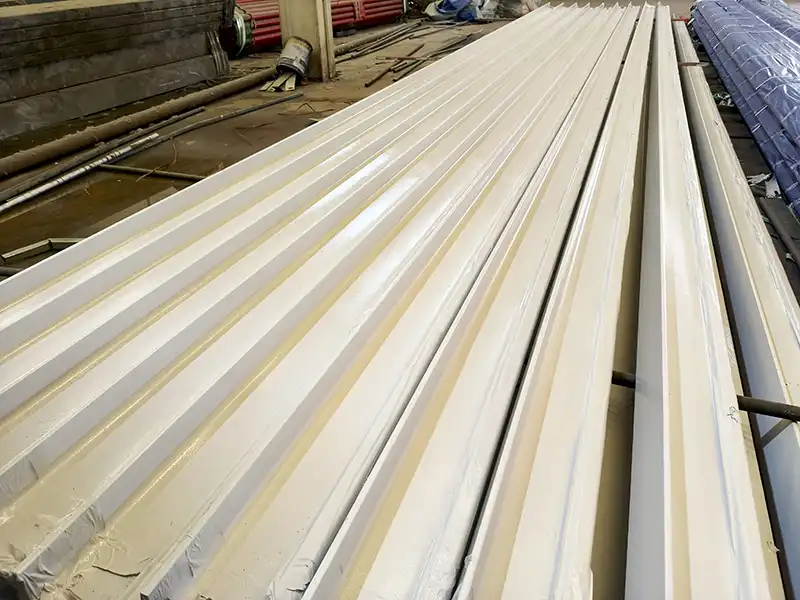
3) Topcoat –Protection & Aesthetics
Shields the system from UV radiation, chemicals, and mechanical wear. Polyurethane or polysiloxane topcoats are recommended for rail environments.
UV stability and color retention
Resistance to spillage (fuels, oils, de-icing salts)
Optional safety colors or high-visibility marking
Typical total DFT for C4 environment: ~240–300 μm. Higher thickness or additional layers can be specified for extended service life.