
Introduction
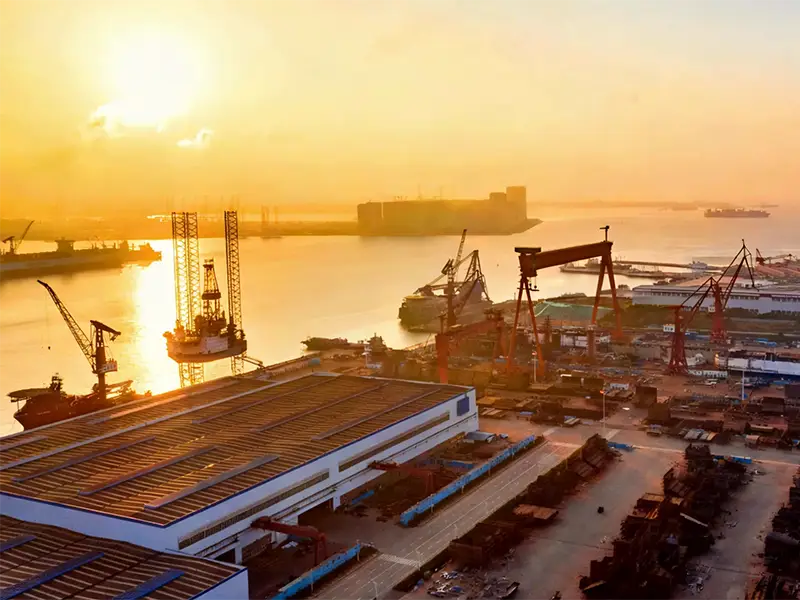
Singapore’s shipbuilding sector depends on stable, low-vibration material handling systems to keep production efficient and safe. In workshops where large gantry cranes operate daily, the quality of the crane rail system plays a direct role in equipment performance, structural protection, and long-term maintenance costs. In this project, our A100 crane rails paired with MK7 steel-reinforced rubber pads provided a robust, vibration-damping setup tailored for the needs of a high-capacity prefabrication workshop.
Project Background
A leading shipyard in Singapore recently upgraded its prefabrication workshop’s material handling infrastructure, with our supply of A100 crane rails (45° mitre-cut ends) and MK7 Steel Reinforced Rubber Pads (discontinuous, single-block type) forming the core of the rail system. The workshop, critical for heavy ship component fabrication, required a durable, vibration-resistant rail solution to support high-load gantry cranes.
Our Solution
A100 Crane Rails (45° Mitre Cut)
Custom-processed A100 rails (compliant with DIN 536 standards, 74.3 kg/m weight) with precision 45° cuts at both ends ensured seamless alignment and stable connections between rail segments—critical for smooth crane movement in the high-capacity workshop.
MK7 Steel Reinforced Rubber Pads (Discontinuous)
The non-continuous, single-block MK7 pads (nitrile rubber with embedded steel plates) were selected to:
- Absorb 45-50% of operational vibration (reducing structural impact on the workshop’s concrete foundation)
- Evenly distribute crane loads (preventing local stress concentrations)
- Enable modular maintenance (partial replacement of pads without full system shutdown)
These pads are tailored for medium-to-heavy load systems, fitting the shipyard’s gantry crane requirements (working temperature range: -25°C to 100°C, oil-resistant for industrial environments).
On-Site Installation (March 2025)
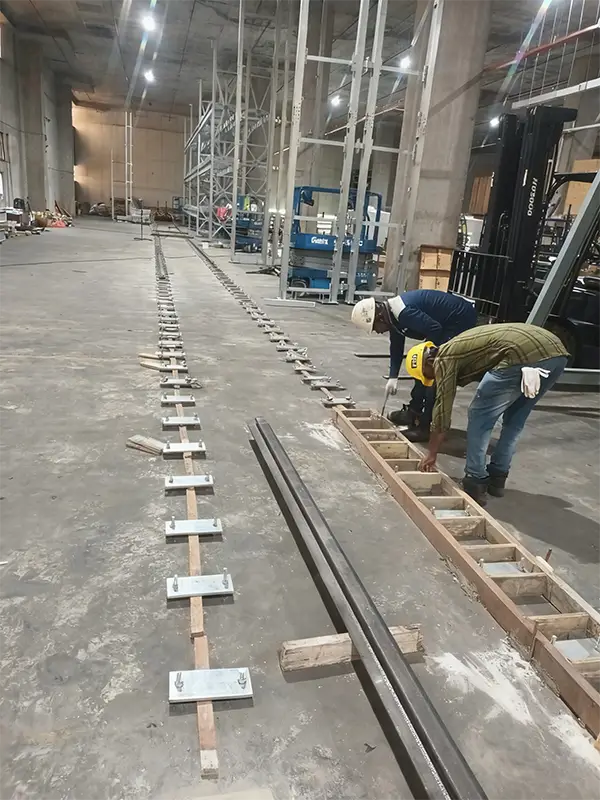
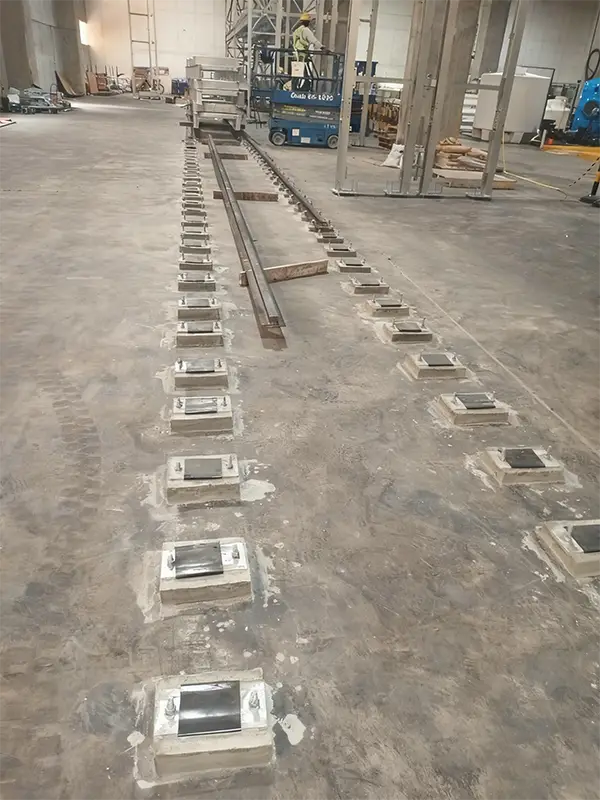
The installation process involved securing the MK7 pads to individual concrete sole plates, then positioning the 45° cut A100 rails for precise alignment. The modular design of the discontinuous pads simplified on-site adjustments, while the steel-reinforced structure of the MK7 pads ensured long-term load-bearing stability.
Outcome
The rail system is now operational, supporting the shipyard’s heavy component handling with reduced noise (12% noise reduction) and extended rail/foundation service life. The 45° cut rails and MK7 pads have improved the workshop’s material flow efficiency while minimizing maintenance downtime.
Benefits to the Client
- Long-term structural protection — vibration reduction directly lowered fatigue stress on the concrete foundation.
- Improved crane running quality — smoother travel reduced wheel wear and rail head deformation.
- Lower lifetime maintenance cost — modular pad replacement and precise 45° rail joints minimized future downtime.
- Higher production efficiency — smoother crane operation improved workflow across the prefabrication line.
Why They Chose Us
- Proven expertise in supplying DIN 536 crane rails for heavy industries.
- Ability to deliver custom processing (45° cuts) with tight tolerances.
- Strong track record in shipyard, steel mill, and port crane projects.
- Fast delivery & technical support during installation.
Conclusion
This isn’t just about rails and pads—it’s about keeping a shipyard running smoothly.
By upgrading to A100 rails and MK7 steel-reinforced rubber pads, the Singapore facility saw fewer alignment issues, less wear on crane wheels, and—most importantly—fewer unplanned stoppages. The cranes now move with greater precision, and the workshop floor stays protected, even under repeated heavy lifts.
It’s a reminder: in demanding environments, the foundation matters as much as the crane itself.
We’ve applied this lesson across ports, steel mills, and heavy fabrication sites worldwide—always matching rail specs and support systems to how equipment actually runs on the ground.