
For this Garbage Grab Crane Rail Systems project at a waste incineration plant, the customer required A100 crane rails, rail clips, and steel-reinforced rubber pads, with a strong emphasis on prompt shipment.
The key challenge of this project was that, despite the tight delivery schedule, the quality verification of the rails and the custom machining requirements could not be overlooked. All 20 12-meter A100 rails required 45° bevel cuts at both ends according to the drawings, with an angular tolerance not exceeding ±0.5°, and no indentations allowed on the wheel-running surface after beveling.
Glory Rail addressed the client’s procurement concerns one by one by providing technical documentation, explaining the machining plan, showcasing past beveling projects, and confirming available stock. The client first contacted us on January 29, 2025, and paid a deposit on February 3; subsequently, they also provided on-site installation photos from a waste-to-energy plant project.
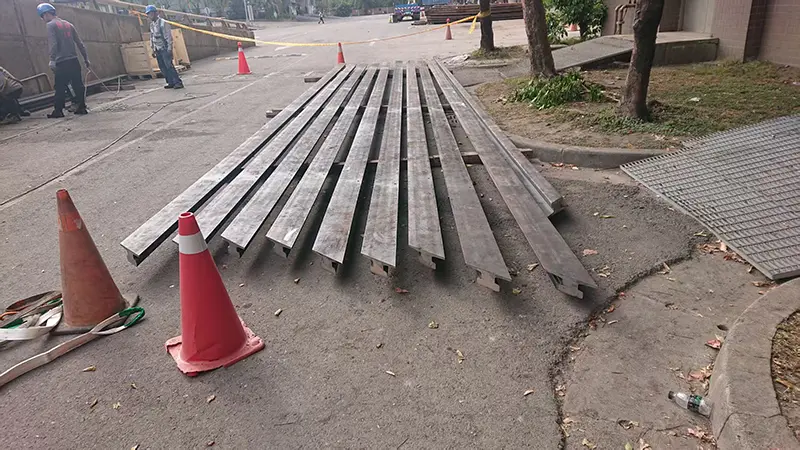
Project Requirements and Final Supply List
The specifications below describe the supply scope agreed for this project, rather than a standard configuration for all waste grab crane installations.
The customer needed more than standard rails. The order also required drawing-based machining and coordinated supply of installation components. Before confirming the purchase, the customer focused on:
- Rail quality: the applicable product standard and whether German certification was available.
- Cutting accuracy: 45° cuts at both ends, with an angular tolerance of ±0.5° to avoid excessive gaps at rail joints.
- Running surface condition: no depressions in the rail running surface after cutting.
- Technical verification: relevant documentation for the rails, clips, and rubber pads.
- Shipment preparation: a short preparation period to support prompt dispatch.
The final order included:
| Product | Specification and Description | Quantity |
|---|---|---|
| A100 crane rail | Supplied to DIN 536; U71Mn steel; 12 m per length; 45° cuts at both ends according to approved drawings | 20 lengths |
| 9120 rail clip | Supplied according to the agreed specifications | 1,000 sets |
| MK7 rubber pad | 7 × 195 × 12,000 mm; styrene-butadiene rubber (SBR); with steel reinforcement | 20 rolls |
Rail Quality: Addressing the Customer’s Certification Questions
Before placing the order, the customer asked about rail quality and whether the A100 rails had German certification. Glory Rail explained that the rails would be supplied to DIN 536 and provided relevant technical documentation for review.
To support the customer’s evaluation, Glory Rail:
- Supplied rail technical documentation for pre-order review.
- Clarified the product standard and order specifications.
- Offered the option of third-party inspection before shipment, allowing the customer to arrange additional verification once the goods were ready.
The quality discussion was based on the stated product standard, technical documentation, and available inspection arrangements. Supply to DIN 536 was not presented as evidence of a separate German certification.
Custom Miter Cutting: Explaining the Process Before Order Confirmation
Rail-end cutting was the main custom machining requirement. In addition to specifying a 45° angle and ±0.5° tolerance, the customer asked how the cutting would be performed and whether the process could meet the site jointing requirements.
Glory Rail explained that the rails would be mechanically cut using a CNC heavy-duty metal band saw with a dedicated angle fixture. Deburring and chamfering would follow the cutting operation.
| Customer Requirement | Corresponding Machining Arrangement |
|---|---|
| 45° cuts at both ends | Machine both ends of all 20 rail lengths according to the customer-approved drawings |
| Angular tolerance within ±0.5° | Treat the specified angle as a key machining and verification requirement |
| No depressions in the running surface | Check the condition of the rail running surface and the areas adjacent to the cut |
| Finished cut edges | Deburr and chamfer the edges after cutting |
Equipment descriptions alone did not give the customer a complete picture of the machining capability. Before order confirmation, Glory Rail therefore shared photos from previous A100 rail 45° miter-cutting projects. During preparation of this order, Glory Rail also provided photos of the actual rail-end machining.
Urgent Supply Requirements: Using Stock Availability to Move Preparation Forward
The customer wanted prompt shipment, but the rails could not be dispatched directly from stock because the specified end cuts had to be completed first. The ability to begin order preparation promptly was therefore an important consideration.
Glory Rail confirmed that A100 rails were available from stock, removing the need to wait for a new rail production run. The remaining preparation work centered on:
- Completing the 45° cuts at both ends according to the approved drawings.
- Conducting post-machining checks and coordinating inspection arrangements.
- Preparing packaging for the rails, clips, and rubber pads.
- Coordinating the subsequent transport plan.
Stock availability allowed preparation to focus on custom machining rather than rail production. Glory Rail also shared machining and packing photos so the customer could follow the order’s progress.
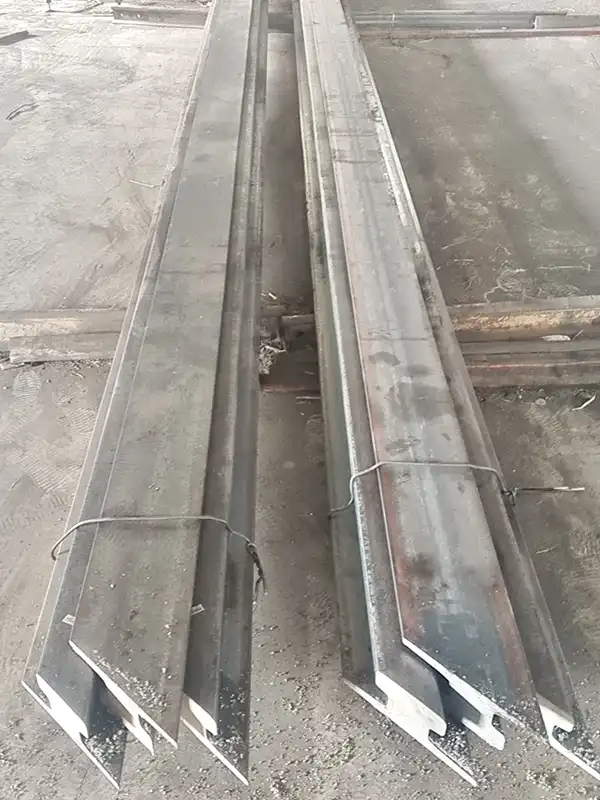
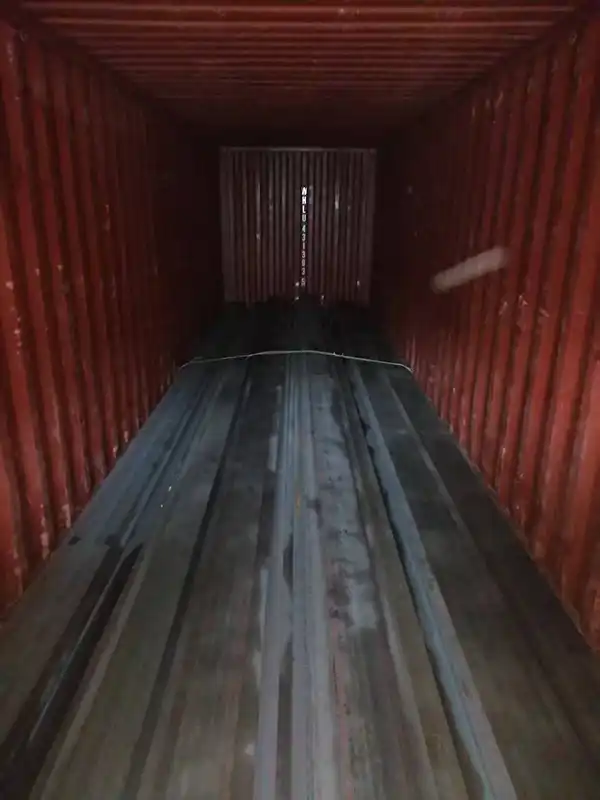
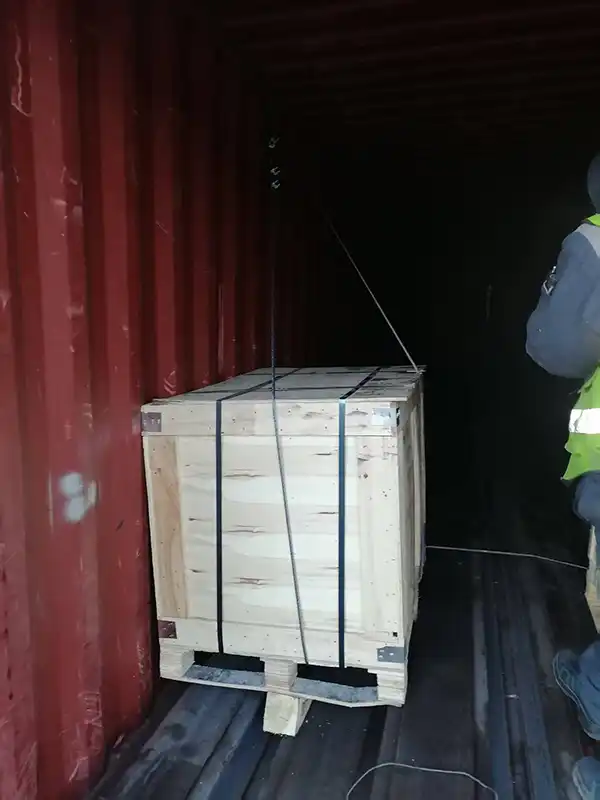
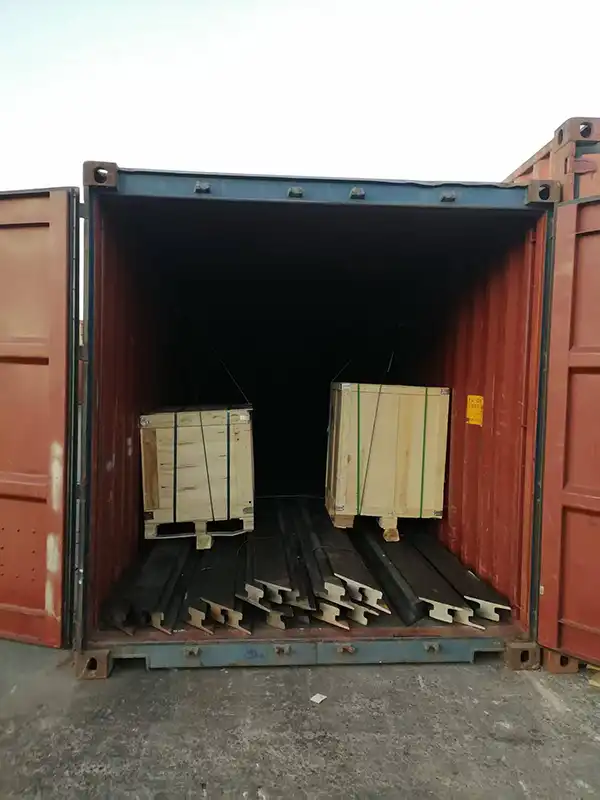
Coordinated Supply of Rails and Installation Components
For this Garbage Grab Crane Rail Systems project, the customer required A100 rails, 9120 rail clips, and steel-reinforced MK7 rubber pads, along with the relevant technical documentation.
- Rails: 20 lengths of A100 rail, with coordinated rail-end machining.
- Fastening components: 1,000 sets of 9120 rail clips.
- Under-rail pads: 20 rolls of MK7 rubber pad with steel reinforcement.
This gave the customer a single point of contact for the rails, accessories, and machining requirements, rather than managing rail-end processing and component procurement through separate supply discussions.
Project Progress: Deposit Paid Within Five Days, Followed by Site Installation Photos
The customer first contacted Glory Rail on January 29, 2025, and paid the deposit on February 3—an interval of five days. During this period, discussions focused on:
- The A100 rail standard and technical documentation.
- The 45° cutting requirements and machining method.
- Previous machining examples involving the same rail profile.
- Stock availability and shipment preparation.
- The option of third-party inspection before shipment.
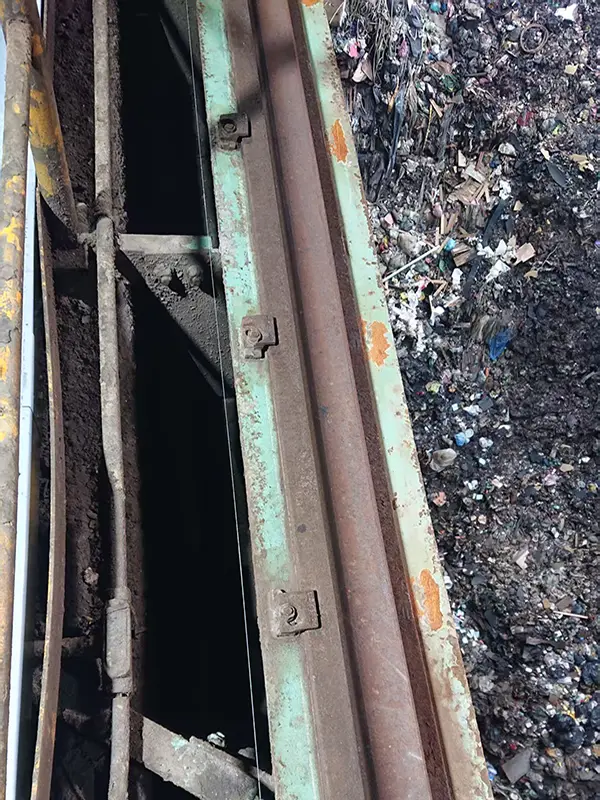
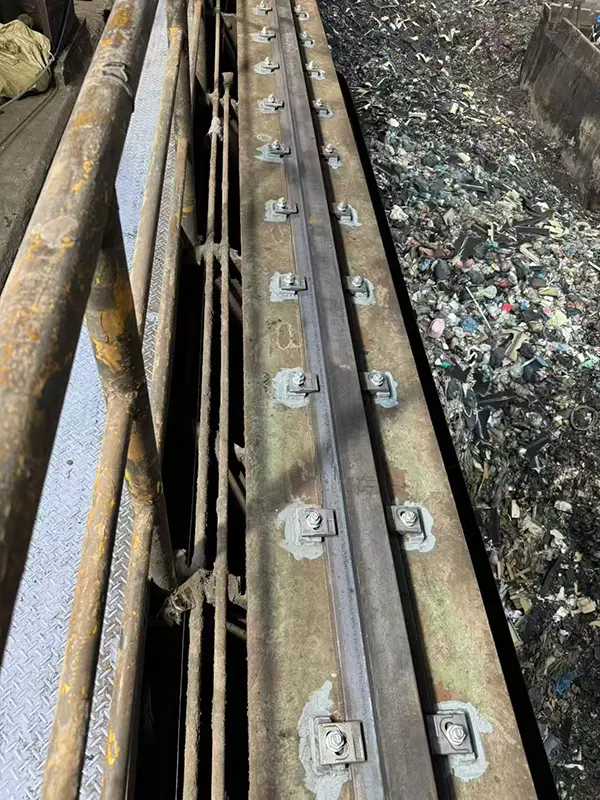
The customer later supplied installation photos from the waste incineration plant, adding a site-level view of the project’s application.
These photos document the installation stage. They are not presented as evidence of commissioning dates, operating performance, or long-term service results.
Define the Supply Scope for Your Project
For Garbage Grab Crane Rail Systems, identifying the rail profile is only the starting point. In this project, the rail-end drawings, cutting tolerances, running surface requirements, and accessory specifications were also central to supply preparation.
When requesting A100 rails, custom rail-end cutting, and matching installation components, please provide:
- Rail profile, steel grade, length per piece, and quantity.
- Rail-end machining drawings, angular tolerances, and surface requirements.
- Rail clip model and rubber pad specifications.
- Required technical documents and inspection arrangements.
- Target shipment date and destination.
Glory Rail can use this information to discuss stock availability, machining options, and the component supply scope, helping establish a clear basis for quotation and delivery planning.