
What Are Transverse Rail Defects?
Transverse rail defects refer to fatigue cracks that develop in a plane perpendicular to the longitudinal direction of the rail. These defects typically initiate inside the rail head and propagate outward under repeated wheel loading.
In most cases, transverse defects cannot be detected visually until the crack reaches the rail surface. Therefore, non-destructive testing (NDT) methods such as ultrasonic inspection are essential for early detection.
The severity of a transverse defect is commonly expressed as a percentage of the rail head cross-sectional area. Once the defect reaches a critical size, the risk of sudden rail fracture increases significantly.
1. Transverse Fissures
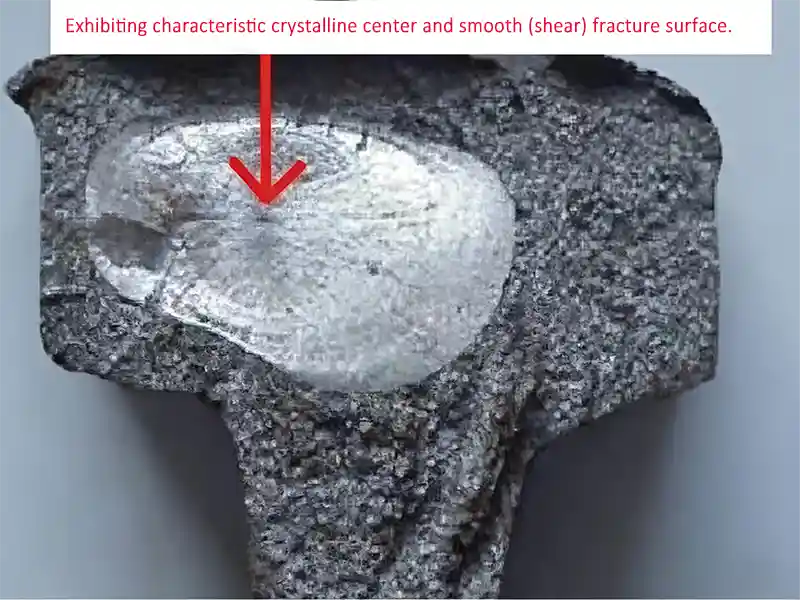
Transverse fissures are progressive internal fractures that originate from a crystalline nucleus within the rail head. The crack expands outward in a circular or elliptical pattern.
Key characteristics:
- Smooth and bright or dark fracture surface
- Crack plane nearly perpendicular to rail length
- Distinct crystalline center surrounded by a polished fracture zone
These defects are dangerous because they remain hidden until significant growth has occurred.
2. Compound Rail Defects
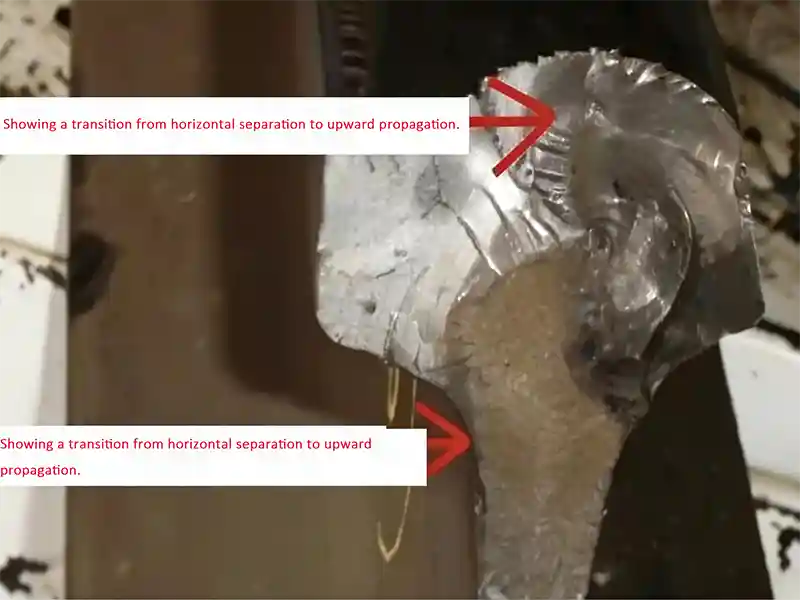
Compound defects are transverse fractures that evolve from horizontal internal separations within the rail head.
Formation mechanism:
- Initiated by longitudinal defects such as segregation bands or inclusions
- Crack first propagates horizontally
- Then turns upward, downward, or both, forming a transverse component
Key features:
- Mixed crack orientation (longitudinal + transverse)
- Higher risk of diagonal rail breakage
- Growth remains slow until ~30–35% of head area, then accelerates rapidly
3. Detail Fractures
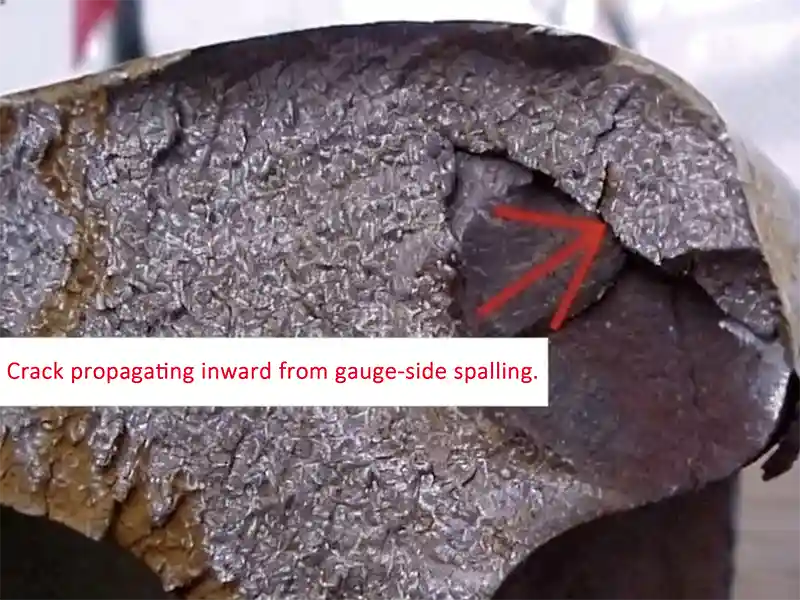
Detail fractures are among the most critical and widely reported rail defects in heavy-haul and high-traffic lines.
Unlike transverse fissures, they originate from the rail surface or near-surface zones, typically at the gauge corner.
Key characteristics:
- No crystalline nucleus
- Initiated from shelling, head checks, or surface damage
- Crack grows transversely into the rail head
Development pattern:
- Slow growth up to ~10–15% of cross-sectional area
- Rapid acceleration afterward, often leading to sudden failure
Multiple detail fractures may develop in heavily damaged rail sections.
4. Reverse Detail Fractures

Reverse detail fractures originate from the lower gauge corner of the rail head.
Causes:
- Stress concentration at notches formed by metal flow (lipping)
- Severe wear conditions
- High axle loads
Behavior:
- Normal growth below ~10% cross-sectional area
- Sudden fracture may occur beyond this point
- Failure threshold is typically lower than standard detail fractures
5. Wheel Burn Fractures
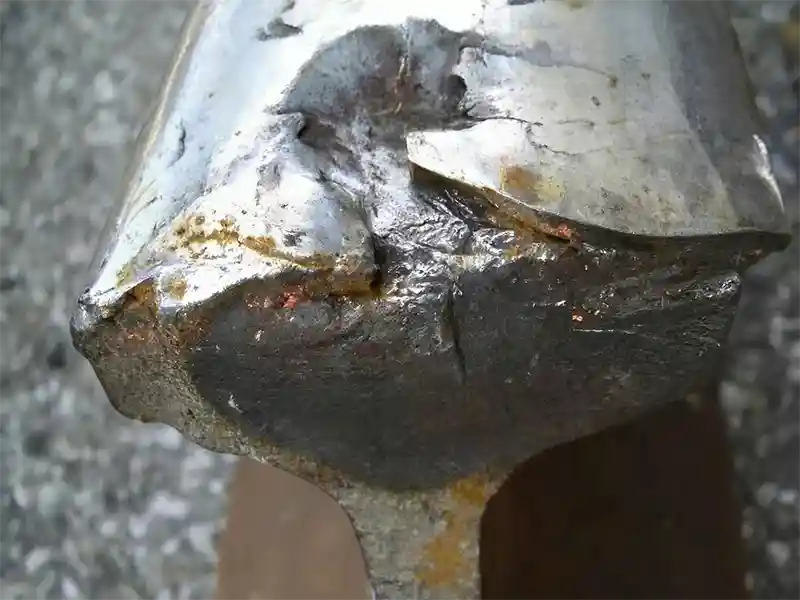
Wheel burn fractures are caused by thermal damage from wheel slip or spin.
Formation process:
- Wheel slip generates intense localized heat
- Rapid cooling creates thermal cracks
- Repeated wheel loading separates the burned layer from base metal
- Transverse cracks may initiate and propagate
Key features:
- Flat burn spots on rail surface
- Multiple defects may occur in the same area
- Growth accelerates after ~10–15% defect size
These defects should not be confused with compound or internal transverse cracks.
6. Sudden Rail Fracture (Without Visible Defects)
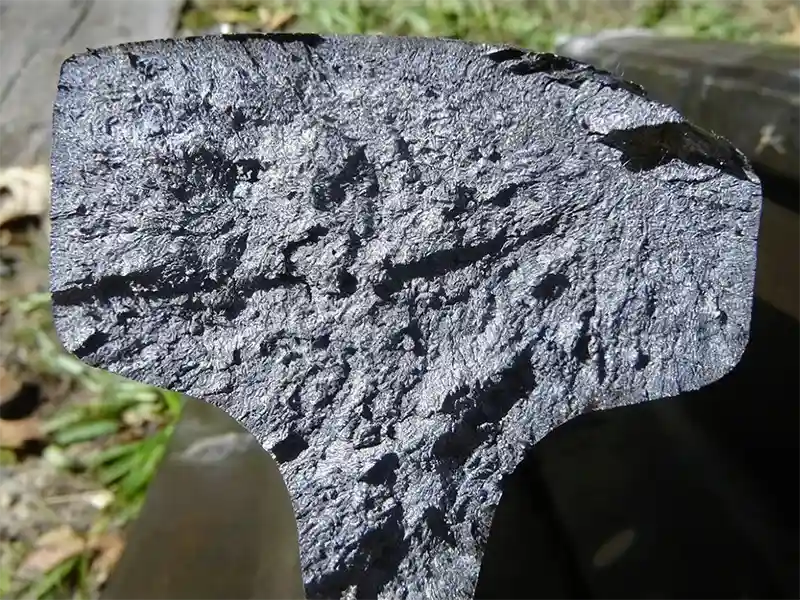
In some cases, rails may fracture without any visible signs of prior cracking.
Typical causes:
- Extreme cold temperatures leading to brittle behavior
- Impact loads from wheel flats or damaged rolling stock
- Poor support conditions under the rail
Characteristics:
- Fresh fracture surface
- No oxidation or fatigue marks
- Difficult to predict and diagnose
Why Transverse Rail Defects Matter
Transverse defects are among the leading causes of rail failures worldwide. Because they often develop internally, they pose a serious risk to operational safety if not detected in time.
Effective management requires:
- Regular ultrasonic inspection
- Surface defect monitoring
- Timely rail grinding and maintenance
- Replacement before critical defect size is reached
Need Reliable Rail Solutions for High-Stress Applications?
If your project involves heavy haul, crane systems, or high-load rail applications, controlling internal defects is critical to long-term performance.
Glory Rail provide:
- High-quality rails with strict internal defect control
- Custom processing and inspection support
- Solutions tailored for demanding operating conditions
👉 Contact us to discuss your project requirements and ensure safer rail performance.