

A railroad track is mainly composed of rails, sleepers (ties), fastening systems, turnouts, ballast, and the subgrade. Each of these railroad track components plays a specific role in supporting train operation. Together, they form a track structure designed to ensure trains run safely and smoothly. Whether on passenger lines or heavy freight routes, reliable railroad track components are essential to the efficiency and performance of rail transportation.
The Role of Railroad Track Components as a System
In practice, railroad track components are designed to:
- Support vertical and lateral train loads
- Maintain accurate track gauge and alignment
- Absorb vibration and dynamic forces
- Provide long-term stability under changing weather conditions
Rails: The Primary Load-Bearing Component
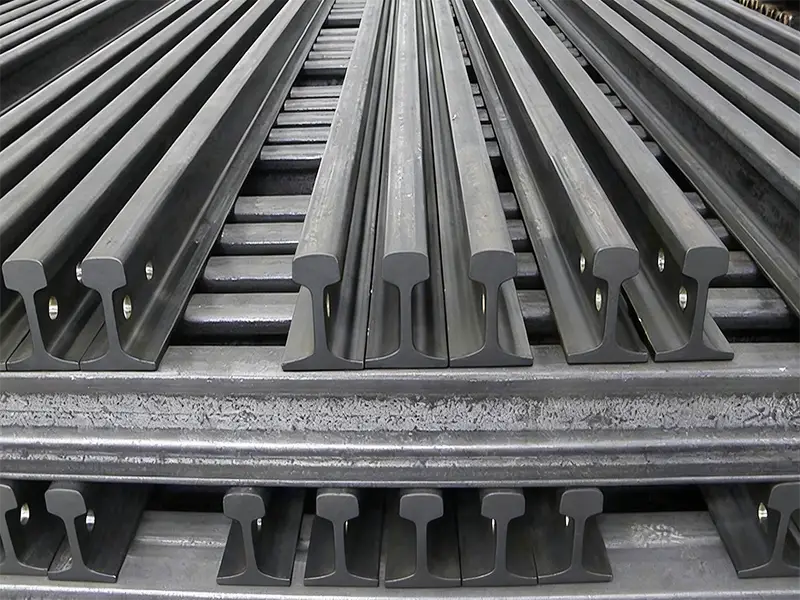
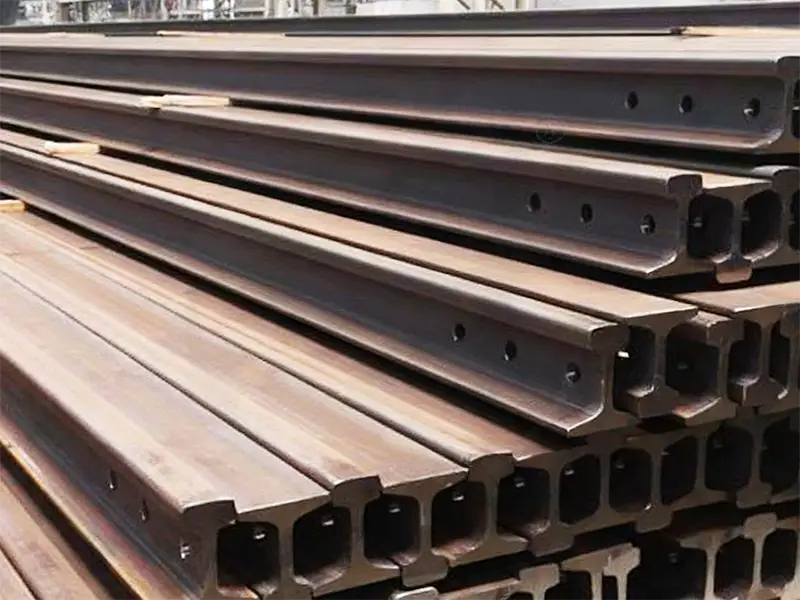
Rails are the most visible and critical of all railroad track components. They directly carry the weight of the train and guide the wheels along the intended path.
Modern rails are made from specialized rail steel designed for high strength, wear resistance, and fatigue performance. The rail head takes the most punishment, especially in curves and high-traffic sections, which is why heat-treated and head-hardened rails are commonly used today.
In real rail service, rail selection depends on factors such as axle load, traffic volume, speed, and maintenance strategy.
Sleepers (Ties): Maintaining Gauge and Load Distribution
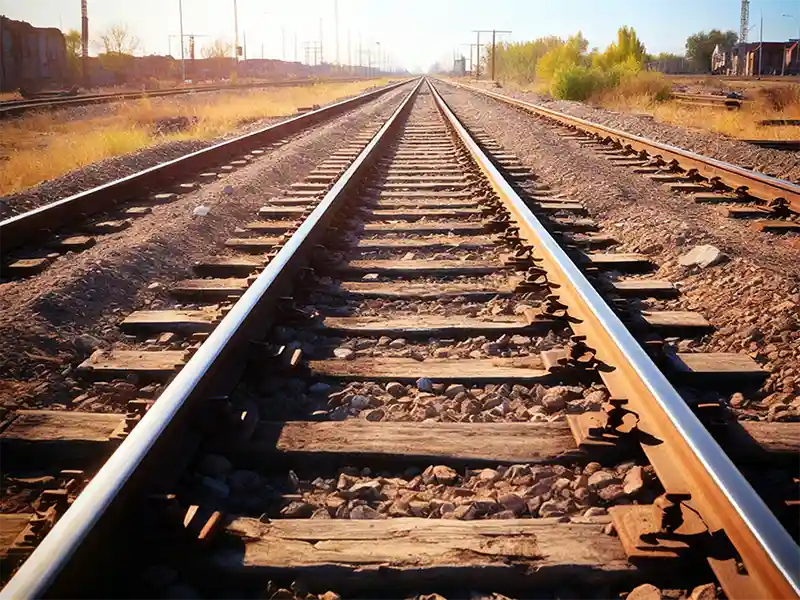
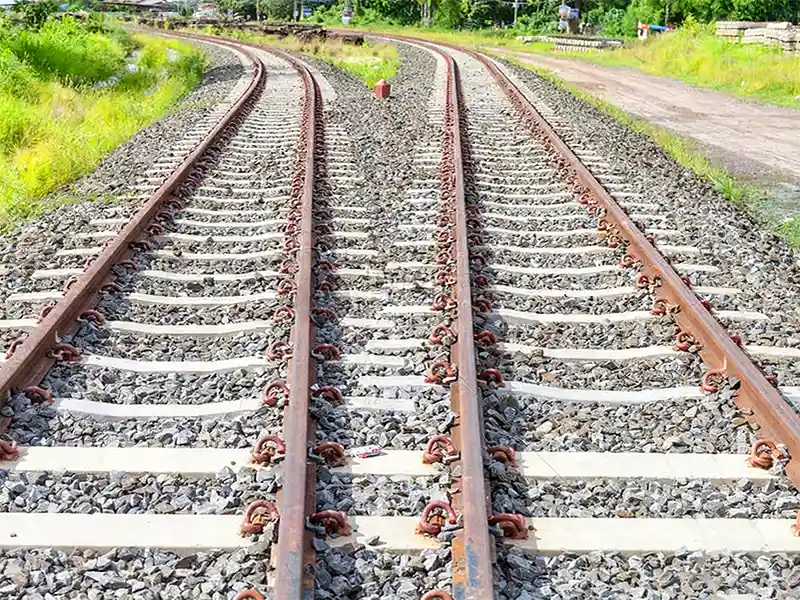
Railway sleepers—also known as ties—sit beneath the rails and serve several important functions:
- Holding the rails at the correct gauge
- Transferring loads from the rails to the ballast
- Providing resistance against lateral and longitudinal movement
Sleepers are typically made from concrete, timber, or composite materials. Concrete sleepers dominate modern mainline railways due to their durability and consistent performance, while timber sleepers are still found in older lines, turnouts, and low-speed applications.
As part of the overall railroad track components system, sleepers play a major role in long-term track geometry stability.
Fasteners: Small Components with a Big Impact
Fasteners connect the rails to the sleepers and keep everything in place under dynamic loads. Though often overlooked, they are essential railroad track components.
A typical fastening system may include:
- Rail clips
- Base plates or sole plates
- Bolts and screws
- Rail pads
Rail pads, in particular, help reduce vibration and protect both the rail and sleeper from excessive stress. Modern elastic fastening systems allow slight movement while maintaining secure rail positioning.
Ballast: Stability, Drainage, and Load Transfer
Ballast is the crushed stone layer that supports the sleepers. It may not look complex, but ballast is one of the most important railroad track components.
Proper ballast provides:
- Effective load distribution
- Drainage to prevent water accumulation
- Resistance to track movement under traffic
Poor ballast condition is a common cause of track settlement and alignment issues. This is why ballast quality, depth, and maintenance are critical in both new construction and track renewal projects.
Subgrade: The Foundation Beneath the Track
The subgrade is the soil layer beneath the ballast and forms the foundation of the entire track structure. All railroad track components ultimately rely on the subgrade to carry loads safely into the ground.
Subgrade design depends heavily on local soil conditions, climate, and drainage. Weak or poorly compacted subgrade can lead to long-term track deformation, regardless of how well the upper components are designed.
Turnouts and Special Track Components
Beyond straight track sections, railroad track components also include specialized systems such as turnouts (switches and crossings). These allow trains to change direction and access different routes.
Turnouts involve additional components:
- Switch rails
- Frogs and crossings
- Guard rails
- Specialized fasteners and sleepers
Because they experience complex loads and frequent impacts, turnouts require higher inspection and maintenance standards than standard track sections.
How Railroad Track Components Work Together in Practice
In real-world rail operations, performance depends on how well all components interact. Strong rails alone cannot compensate for weak ballast, just as high-quality sleepers cannot perform well on poor subgrade.
This systems-based approach is why modern railway engineering focuses on:
- Matching component specifications to service conditions
- Using standardized materials and testing methods
- Planning maintenance around actual track behavior
Understanding railroad track components as an integrated system leads to safer operations and lower lifecycle costs.
Conclusion
Railroad track components may seem simple, but each part plays a crucial role in ensuring the safety, efficiency and durability of railway infrastructure. From rails and sleepers to fasteners, ballast and roadbeds, every component must operate in accordance with the design requirements so that the entire system can function properly.