
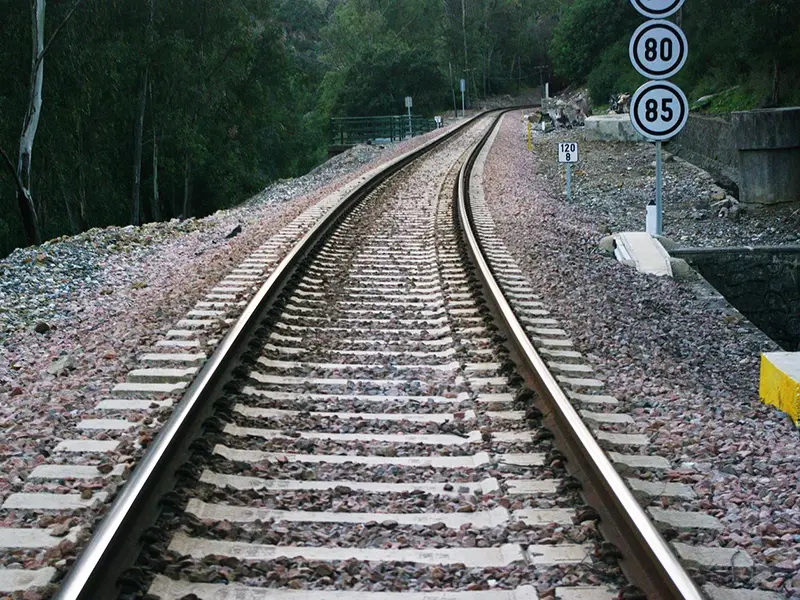
Railroad track steel is not just “steel shaped like a rail.” It is a purpose-engineered material designed to survive decades of heavy loading, constant wheel contact, and environmental exposure that would quickly destroy ordinary structural steel.
If you’ve ever wondered why rail tracks last for years under massive trains—or why certain lines require premium rail grades—the answer lies in the material design of railroad track steel.
Why Ordinary Steel Cannot Be Used for Railroad Tracks
From an engineering standpoint, rail tracks operate in one of the harshest mechanical environments found in civil infrastructure.
Each passing wheel applies:
- Extremely high contact stress at the rail head
- Repeated cyclic loading, often millions of cycles per year
- Localized heat from braking and wheel slip
- Vibration, impact, and lateral forces in curves
Standard carbon structural steel simply does not handle this combination well. It deforms too easily, wears too fast, and develops fatigue cracks far earlier than acceptable.
That is why railroad track steel is formulated and processed specifically for rail service—not for buildings, bridges, or general fabrication.
Main Types of Railroad Track Steel Used Today
In practice, railroad track steel falls into three broad categories, depending on service conditions and axle loads.
Carbon Steel Rails
Carbon steel remains the baseline material for many rail networks.
Typical carbon content ranges from roughly 0.4% to 0.8%, combined with controlled amounts of manganese and silicon. This composition provides:
- Adequate strength for moderate traffic
- Stable welding performance
- Reasonable cost for large-scale rail projects
For low to medium axle loads, standard carbon railroad track steel continues to perform reliably.
Alloy Steel Rails
As traffic density and axle loads increase, alloying becomes necessary.
By adding elements such as chromium, vanadium, or molybdenum, alloy railroad track steel gains:
- Higher wear resistance at the rail head
- Improved fatigue performance
- Better resistance to surface cracking in curves
These alloy rails are commonly specified for heavy-haul freight lines, mining railways, and high-stress curve sections where standard carbon rails wear out too quickly.
Heat-Treated and Head-Hardened Rails
Modern rail networks increasingly rely on heat-treated railroad track steel, especially in demanding environments.
Head hardening focuses on strengthening the rail head—the area that actually contacts the wheel—while maintaining sufficient toughness in the rail web and base.
The result is:
- Significantly higher hardness at the running surface
- Slower wear rates
- Longer maintenance intervals
This type of railroad track steel is widely used on high-speed lines, busy freight corridors, and urban rail systems with frequent braking.
Chemical Composition: What Each Element Actually Does
Rail steel performance is driven by chemistry, but not all elements play equal roles.
| Element | Practical Effect in Rail Steel |
|---|---|
| Carbon | Increases strength and wear resistance |
| Manganese | Improves toughness and reduces brittleness |
| Silicon | Enhances strength and supports clean steelmaking |
| Chromium | Improves wear and fatigue resistance |
| Vanadium | Refines grain structure and increases durability |
| Phosphorus | Undesirable; promotes brittle behavior |
| Sulfur | Undesirable; increases crack sensitivity |
In high-quality railroad track steel, phosphorus and sulfur are kept as low as possible to prevent long-term fatigue failures.
Mechanical Properties That Actually Matter in Service
Strength and Load Capacity
Rail steel must resist permanent deformation under repeated wheel loads.
Typical mechanical ranges include:
- Tensile strength: approximately 800–1200 MPa
- Yield strength: often above 500 MPa, depending on grade
These values ensure the rail maintains geometry under sustained traffic.
Hardness and Wear Resistance
Hardness directly affects how quickly the rail head wears.
- Conventional rails: roughly 240–300 HB
- Head-hardened rails: commonly 320–390 HB
Higher hardness extends rail life, but engineers must balance it against fracture risk, especially in cold climates.
Toughness and Fatigue Behavior
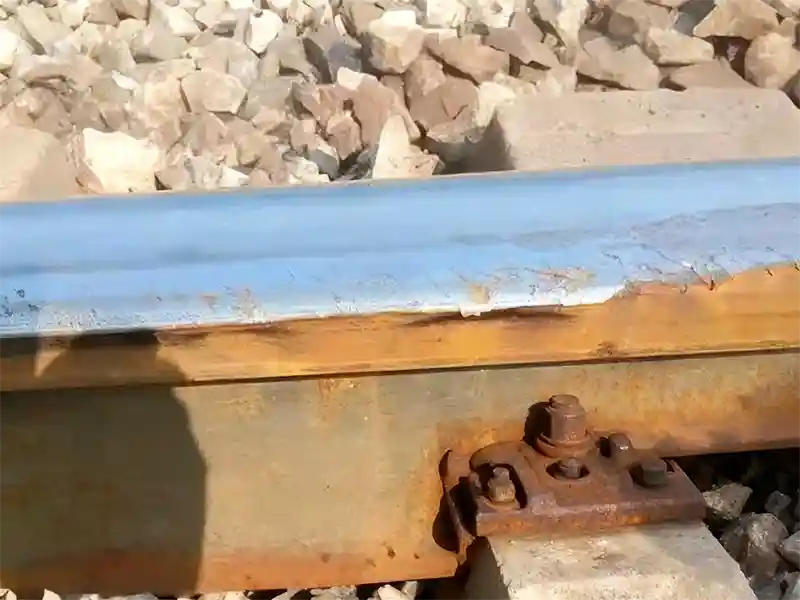
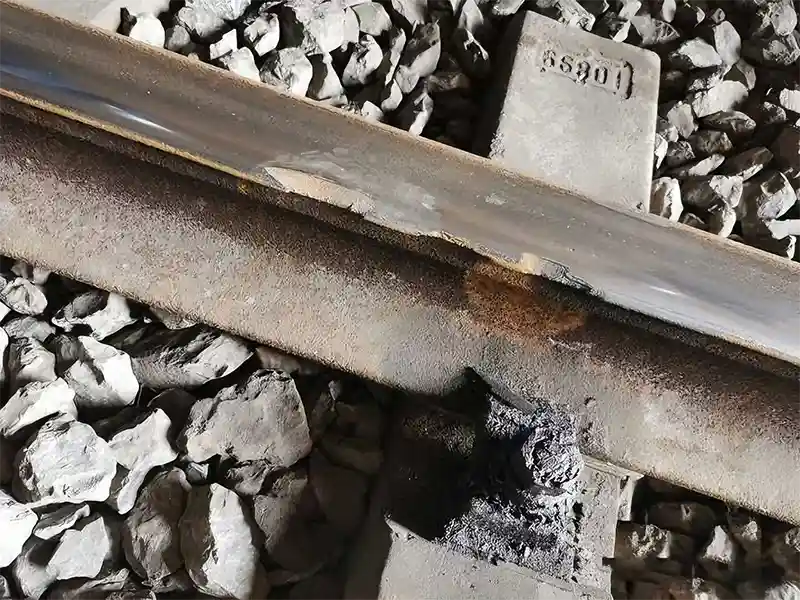
Rail failure rarely happens from a single overload. Instead, it develops slowly through fatigue.
Good toughness allows railroad track steel to:
- Absorb impact without cracking
- Resist crack propagation once microcracks form
- Maintain integrity under millions of load cycles
This is especially critical in curves, turnouts, and high-speed sections.
Common Failure Modes Engineers Try to Prevent
Material selection is driven by real-world failure mechanisms, including:
- Rail head wear
- Rolling contact fatigue (RCF)
- Plastic flow at the running surface
- Thermal cracking from braking heat
- Corrosion-assisted fatigue in aggressive environments
The right railroad track steel grade significantly reduces the risk and frequency of these problems.
Standards and Typical Rail Steel Grades
Railroad track steel is produced under strict national and international standards, including:
- EN 13674 (Europe)
- AREMA specifications (North America)
- GB/T 11264 (China)
These standards define chemical limits, mechanical properties, and testing requirements to ensure consistent performance in service.
Where Different Grades of Railroad Track Steel Are Used
Depending on traffic and operating conditions, railroad track steel is applied in:
- Mainline passenger and freight railways
- Heavy-haul mining lines
- Port and terminal rail systems
- Industrial and crane rail installations
- Metro and light rail transit networks
Matching the rail grade to the application is critical for safety, cost control, and long-term reliability.
Conclusion
Train track steel is a highly specialized material, shaped by decades of engineering experience and field performance. Its chemistry, processing, and mechanical properties are carefully balanced to handle loads and fatigue that ordinary steel cannot survive.
For anyone involved in rail design, procurement, or maintenance, understanding how railway track steel works is essential to building safer and longer-lasting rail infrastructure.