
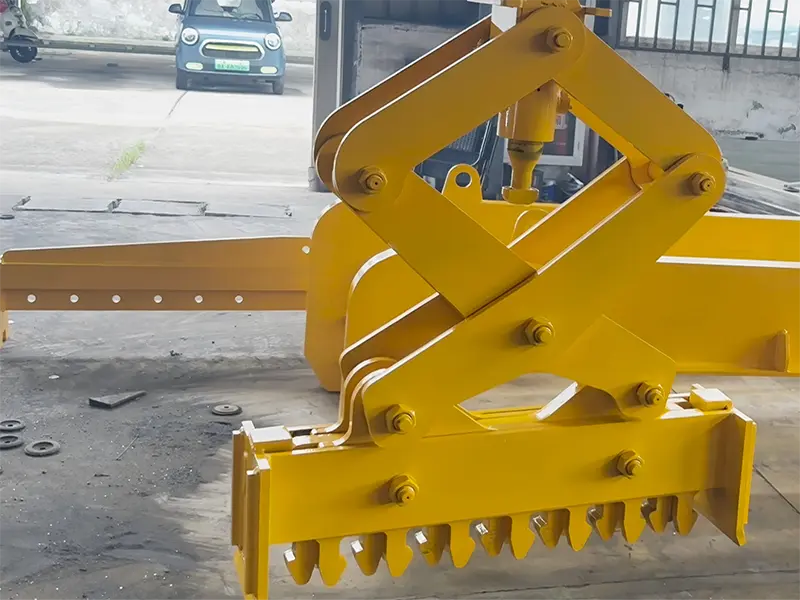
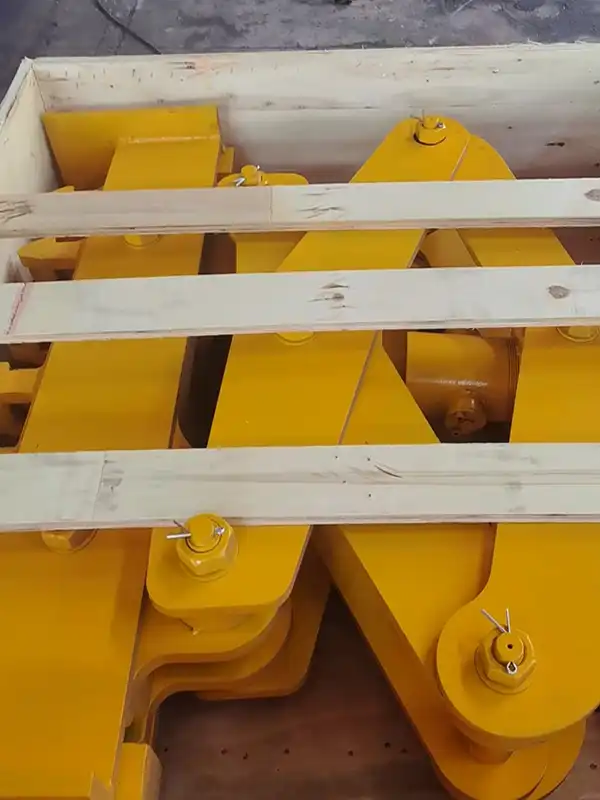
When a Canadian logistics provider needed a 115RE rail lifting clamp for handling multiple long rails, the challenge was more complex than selecting a lifting tool by capacity alone. Glory Rail worked with the customer to verify the actual rail profile before production, ensuring the lifting clamp matched the geometry of 115RE rails and could safely support an operation involving eight 80 ft rails in a single lift.
Project Overview
- Location: Canada
- Industry: Warehousing & logistics
- Product: Scissor rail lifting clamps
- Rail Profile: 115RE
- Shipment Tianjin, July 2026
The customer operates rail storage, transportation and logistics services across North America, where long welded rails are routinely moved between warehouses, ports and project sites. To improve loading efficiency, they required two scissor-type lifting clamps capable of handling eight 80 ft rails during each lifting cycle.
The Real Challenge Wasn’t Weight—It Was Rail Geometry
At first glance, the project appeared straightforward. The lifting requirement was clear, and the expected working load fell within the equipment’s design range.
However, during the engineering review, one detail changed the entire design direction: rail profile compatibility.
Initially, the lifting clamp was considered suitable for both 115RE and 136RE rails. Once production drawings were prepared, our engineering team compared the actual rail head dimensions and confirmed that the two profiles were not interchangeable for this application.
Although both belong to the AREMA rail family, their head widths and overall dimensions differ enough to affect how a scissor clamp grips the rail. For lifting equipment, even a few millimeters of variation can influence contact stability and load distribution.
Rather than manufacturing a universal clamp with compromised accuracy, the customer approved a 115RE-specific design before production began.
Why Eight 80 ft Rails Changed the Design
Each rail measured approximately 24.4 meters (80 ft). Lifting eight rails together meant moving nearly 195 meters of steel rail in one operation, with a combined rail weight of roughly 11 tonnes.
This wasn’t simply about increasing lifting capacity. Long rails behave differently during handling:
- Greater length increases bending sensitivity during lifting.
- Multiple rails must remain evenly aligned throughout transport.
- Uneven gripping can create movement between individual rails.
- Stable engagement becomes more important than maximum load alone.
For logistics companies, reducing the number of lifting cycles improves warehouse productivity, but only if every lift remains predictable and secure.
Engineering Solution
The final configuration centered on one principle: match the clamp to the rail profile before manufacturing.
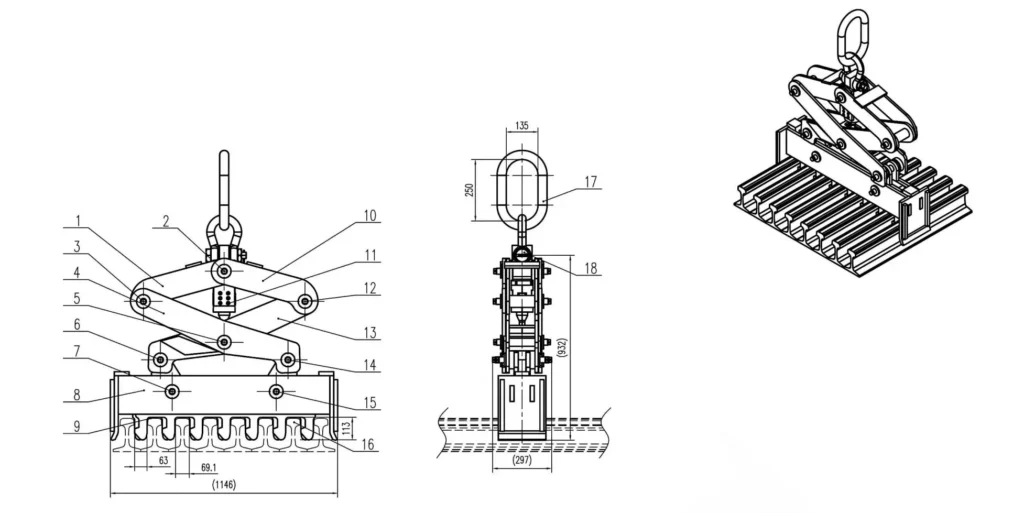
The 115RE rail lifting clamp was designed specifically around the customer’s working conditions rather than a generic specification sheet.
Final configuration
| Item | Specification |
|---|---|
| Clamp Type | Scissor rail lifting clamp |
| Rail Profile | 115RE |
| Rails per Lift | 8 |
| Rail Length | 80 ft (24.4 m) |
| Quantity | 2 sets |
| Application | Warehouse & rail logistics handling |
By confirming the rail section before production, the customer avoided the common risk of ordering lifting equipment based solely on nominal rail weight or rail family.
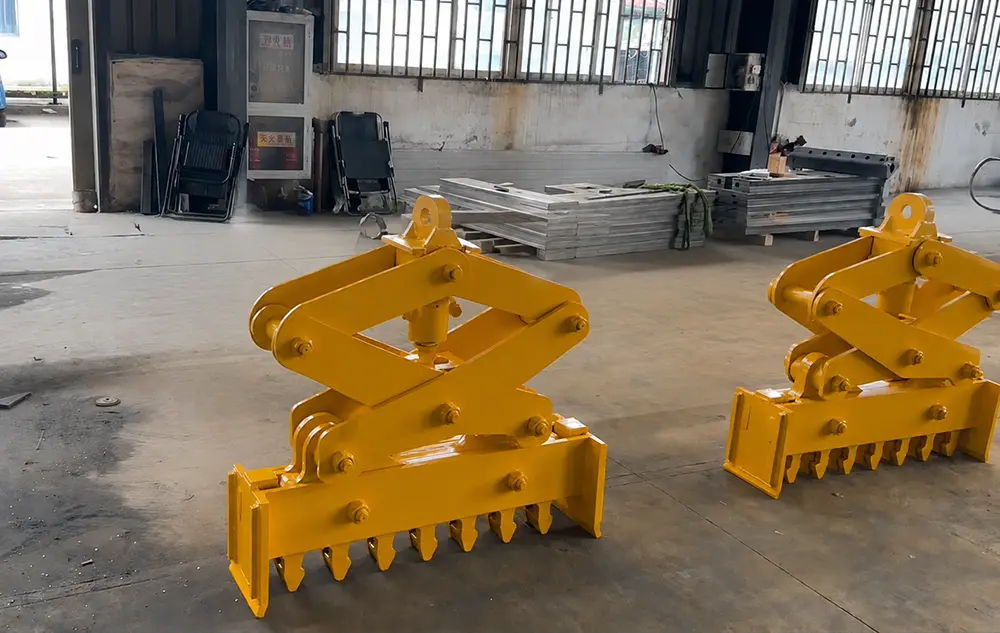
A Small Design Decision That Prevented a Bigger Problem
One of the biggest lessons from this project is that similar rail names do not guarantee identical lifting compatibility.
Many rail handling projects begin with statements like “115RE and 136RE are almost the same.” In practice, lifting equipment interacts with the rail head—not just the rail’s weight. A mismatch may not become obvious until the clamp is manufactured or tested, making early engineering verification far more valuable than later modification.
For logistics operators managing long rails across different inventories, confirming the exact rail profile before production can reduce delays, eliminate redesign costs and improve operational safety.
Project Outcome
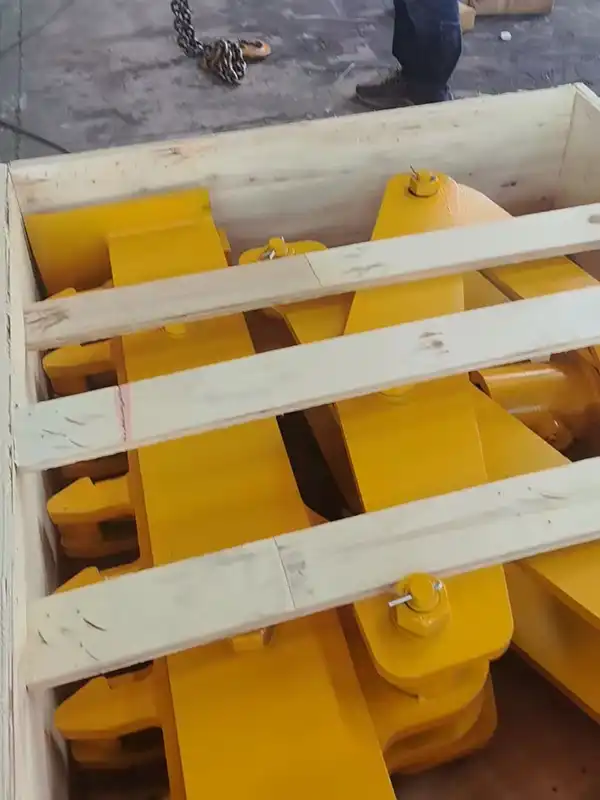
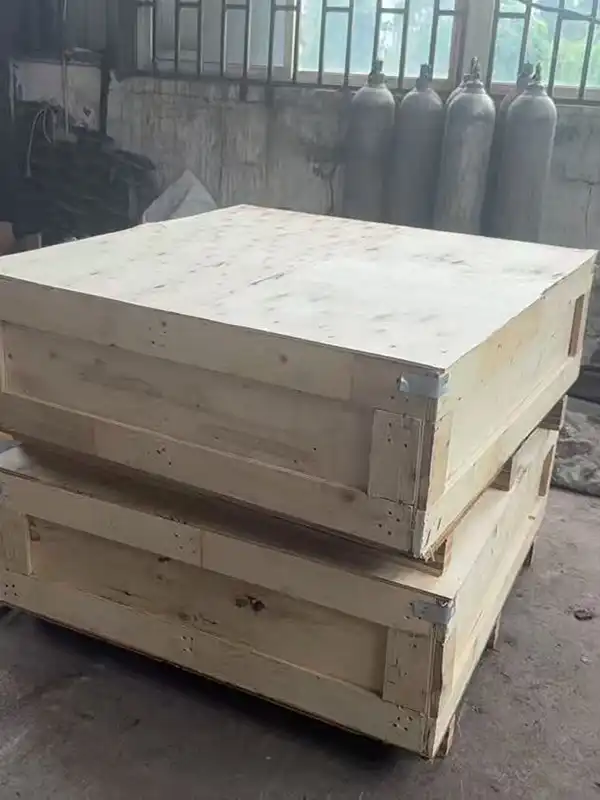
The two customized lifting clamps were completed and shipped from Tianjin at the end of July 2026. The customer received a solution tailored specifically for 115RE rails, supporting efficient handling of long rail bundles while maintaining compatibility with their warehouse lifting system.
This project reflects Glory Rail’s approach to customized rail handling equipment: verify the application first, engineer around the actual rail profile, and deliver solutions that match real operating conditions rather than assumptions. Whether the requirement involves standard railway rails or specialized industrial sections, a properly designed 115RE rail lifting clamp begins with understanding how the rail will actually be lifted in the field.