
Introduction
Steel rails are built to withstand millions of tons of repeated wheel loads, but continuous operation inevitably leads to surface wear, deformation, and rolling contact fatigue. If these issues are left untreated, they can increase maintenance costs, generate excessive noise, and eventually shorten the lifespan of the track. Rail Grinding is a preventive maintenance method that removes a thin layer of damaged metal from the rail head, restoring the original profile and improving wheel–rail contact before defects become more serious.
Whether used on heavy haul railways, high-speed lines, industrial tracks, or crane runways, this process helps operators improve reliability, reduce lifecycle costs, and postpone expensive rail replacement projects.
What Is Rail Grinding?
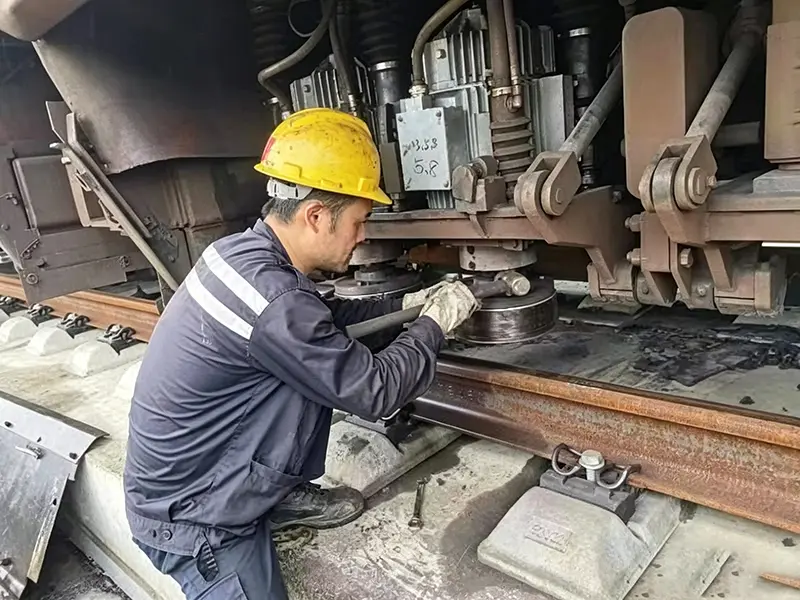
Rail Grinding is a rail maintenance technique that uses rotating grinding wheels to remove a small layer of metal from the rail surface. The process is designed to restore the original rail profile, eliminate surface damage, and improve the interaction between the wheel and rail.
Unlike simple rail wear correction, modern rail grinding focuses on achieving a specific rail profile based on operating conditions, wheel geometry, and traffic requirements.
During the grinding process, operators can control:
- Grinding depth
- Grinding angle
- Rail profile shape
- Material removal rate
This allows rail maintenance teams to address different types of rail defects while minimizing unnecessary metal removal.
Why Do Steel Rails Need Grinding?
Even high-quality rails such as UIC rails, AREMA rails, JIS rails, and crane rails experience gradual deterioration during service. Common causes include heavy axle loads, frequent train operations, improper wheel-rail contact, and environmental conditions.
1. Remove Rolling Contact Fatigue
Rolling contact fatigue is one of the major causes of rail deterioration.
Repeated wheel loading can create:
- Head checks
- Surface cracks
- Squats
- Micro-cracks on the rail head
If these defects continue developing, they may penetrate deeper into the rail and increase the risk of rail failure.
Rail grinding removes the damaged surface layer before cracks become critical.
2. Correct Rail Profile Deformation
During operation, the rail head gradually changes shape due to uneven wheel contact.
Typical problems include:
- Gauge corner wear
- Side wear
- Rail head deformation
- Irregular contact areas
This process restores the designed rail profile, ensuring better wheel-rail interaction and reducing excessive wear.
3. Reduce Rail Corrugation and Noise
Rail corrugation is a periodic wave-like wear pattern that commonly occurs on metro lines, industrial tracks, and heavily used railway sections.
It can cause:
- Increased vibration
- Higher noise levels
- Accelerated wheel and rail wear
Regular grinding helps remove corrugation and improves ride comfort.
The Rail Grinding Process
1. Rail Inspection and Defect Analysis
Before grinding, the rail condition is evaluated through:
- Visual inspection
- Rail profile measurement
- Ultrasonic testing
- Wear analysis
The purpose is to determine the required grinding depth and profile correction.
2. Grinding Parameter Setting
Based on rail condition, technicians adjust:
- Grinding wheel angle
- Grinding pressure
- Number of grinding passes
Different rail applications require different grinding strategies.
For example:
- Heavy haul railway rails may require deeper corrective grinding.
- High-speed railway rails usually require precise profile control.
- Crane rails may require localized maintenance due to concentrated wheel loads.
3. Material Removal and Profile Restoration
During operation, grinding wheels remove a controlled amount of rail steel from the running surface.
The goal is not to reduce rail size but to restore the correct geometry while removing damaged material.
4. Final Inspection
After grinding, the rail is checked to confirm:
- Correct rail profile
- Smooth running surface
- Removal of defects
- Improved wheel-rail contact condition
Rail Grinding Applications
Heavy Haul Railway
Heavy haul railways experience extremely high axle loads and traffic volumes. Grinding helps control:
- Rolling contact fatigue
- Rail head wear
- Surface defects
Common rail types include:
- UIC60 Rail
- 136RE Rail
- 141RE Rail
- 60E1 Rail
High-Speed Railway
High-speed trains require precise rail geometry to maintain smooth operation.
Rail grinding helps:
- Maintain accurate rail profiles
- Reduce vibration
- Improve passenger comfort
Industrial Rail Systems
Industrial tracks used in factories, ports, and mining facilities also require regular maintenance.
Applications include:
- Steel plant rail systems
- Mining railway tracks
- Material handling rail systems
Crane Rail Systems
Crane rails experience concentrated wheel loads from crane operations.
Common crane rails include:
- DIN 536 A45
- DIN 536 A65
- DIN 536 A100
- QU70 Rail
- QU80 Rail
- QU100 Rail
Rail grinding can help reduce:
- Rail head deformation
- Wheel flange stress
- Uneven contact wear
For heavy-duty crane systems, proper rail maintenance is essential for extending the service life of both crane wheels and rails.
Rail Grinding vs Rail Replacement
Rail replacement is sometimes necessary when damage exceeds acceptable limits. However, regular grinding can significantly delay replacement.
| Rail Grinding | Rail Replacement |
|---|---|
| Removes surface defects | Removes entire rail section |
| Lower maintenance cost | Higher material and labor cost |
| Extends rail service life | Required for severe damage |
| Suitable for preventive maintenance | Used when rail condition is beyond repair |
A proper maintenance strategy usually combines inspection, grinding, and replacement when necessary.
Benefits of Regular Grinding
Extend Steel Rail Service Life: By removing fatigue damage before it develops deeper, grinding allows rails to remain in service longer.
Improve Railway Safety: Removing cracks and surface defects reduces the possibility of rail failure.
Reduce Maintenance Costs: Preventive grinding is generally more economical than frequent rail replacement.
Improve Wheel and Rail Performance: A smooth and optimized rail profile reduces wheel wear and improves operating efficiency.
How Proper Rail Selection Reduces Grinding Requirements
Although rail grinding is an important maintenance method, selecting the correct rail type and specification from the beginning can reduce maintenance frequency.
Factors affecting rail performance include:
- Rail weight
- Steel grade
- Hardness
- Loading conditions
- Operating environment
For example:
- Heavy haul applications may require premium wear-resistant rails.
- Port crane systems require rails designed for high concentrated loads.
- Industrial tracks need rails matched with actual wheel loads and operating frequency.
Choosing the correct steel rail helps achieve a balance between initial investment and long-term maintenance cost.
Conclusion
Rail Grinding is a key technology for maintaining modern steel rail systems. By restoring rail profiles, removing fatigue defects, and improving wheel-rail contact, rail grinding helps extend rail service life and maintain safe operation.
Whether used for heavy haul railways, industrial rail systems, or crane rail applications, a proper grinding and maintenance strategy can reduce downtime, lower lifecycle costs, and improve overall rail system performance.
As a professional steel rail supplier, we provide various rail solutions for railway, industrial, mining, and crane applications, helping customers select suitable rail products according to their operating requirements.