
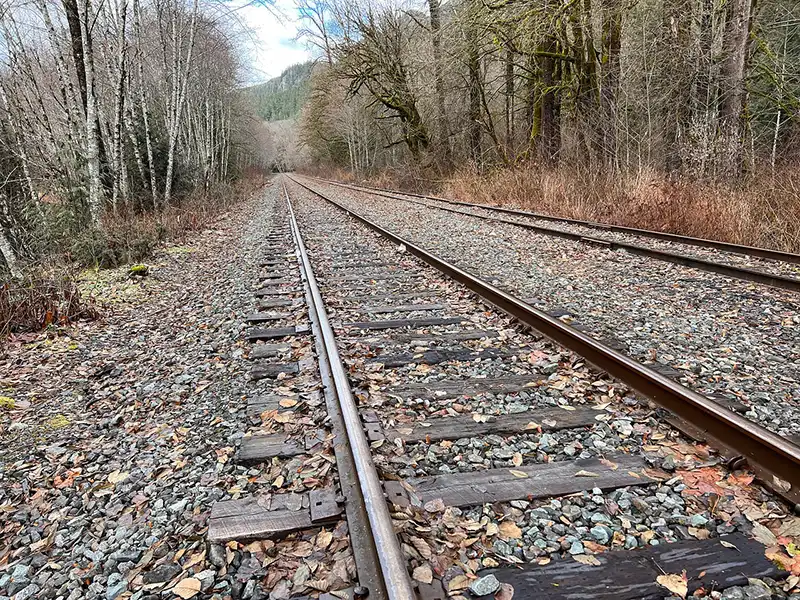
Choosing the right railroad track for a freight line, industrial siding, or mining operation comes down to three decisions: rail section, steel grade, and supplier.
This guide covers what you need to know before placing an order.
1. Start with Rail Weight and Section
Rail weight is the first specification any supplier will ask for. In North America, it is expressed in pounds per yard (lb/yd). Metric markets use kilograms per meter (kg/m).
Common sections used globally:
| Rail Section | Weight | Typical Application |
|---|---|---|
| 12kg / 18kg / 22kg / 30kg | Light rail | Mining tracks, narrow gauge, light industrial |
| 40kg / 50kg | Medium rail | Industrial sidings, port tracks, light freight |
| 60kg / 115RE | Heavy rail | Mainline freight, high tonnage |
| 132RE / 136RE / 141RE | Extra heavy | Heavy-haul corridors, high-speed passenger |
If you are unsure which section fits your project, provide the following to any serious supplier:
- Axle load (tonnes)
- Annual gross tonnage (million tonnes per year)
- Train speed (km/h or mph)
- Minimum curve radius (meters or feet)
A supplier can then recommend the minimum rail weight and steel grade.
2. Steel Grade Determines Service Life
Two rails with the same weight can have very different lifespans. The difference is steel grade and heat treatment.
Standard carbon rail – Hardness around 260 HB. Suitable for tangent track, low tonnage, or temporary lines.
Head‑hardened rail – Hardness 320–390 HB. The rail head is heat treated after rolling. Used on curves and mainlines with moderate to high tonnage.
Alloy rail – Contains chromium, vanadium, or molybdenum. Hardness can reach 400+ HB. For sharp curves, heavy axle loads, or extreme wear conditions.
For a curved section with radius under 600 meters and annual tonnage over 10 million tonnes, head‑hardened or alloy rail is strongly recommended. Standard carbon rail in that condition will show severe head wear within two to three years.
All rail sold for mainline or industrial use should meet AREMA (North America), EN 13674 (Europe), or ASTM A1 standards. Request mill certificates with every shipment.
3. Track Gauge: Do Not Assume Standard
Standard gauge is 1,435 mm (4 ft 8.5 in). However, many industrial and mining projects use narrow gauge – 900 mm, 762 mm, 600 mm – with lighter rail sections.
When ordering for a narrow gauge line, specify:
- Gauge (distance between inner rail faces)
- Rail section (e.g., 30kg/m for 762mm gauge)
- Rail length (usually 6m, 8m, 10m, 12m, or 25m)
Also confirm rail drilling – fishbolt hole sizes and spacing vary by region. Standard AREMA drilling patterns differ from Chinese or European patterns. Supplying a drawing of your existing joint bars or fishplates prevents mismatches.
4. New Rail vs. Used Relay Rail
New rail is the straightforward choice. You get certified material, full length options (18m to 100m), and predictable performance. Price is higher, but you know what you are buying.
Used or relay rail costs less but carries risk. Relay rail is taken from retired mainlines, cropped to remove worn sections, and resold. It can be a good value for:
- Industrial sidings with low speeds and light loads
- Temporary tracks
- Non‑critical applications
Before buying used rail, request:
- Original rail section and weight
- Measured head wear (mm or inches lost from original profile)
- Photos of the rail ends and running surface
- Any known defects (head checks, bolt hole cracks, welded joint condition)
Reputable used rail suppliers grade their stock – for example, “90% remaining life” or “light wear suitable for 10‑20 mph operation”. Avoid suppliers who cannot provide measurements.
5. Heat Number Traceability Matters for New Rail
For new rail, each length is stamped with a heat number. That number links to the mill’s test records: chemical composition, mechanical properties, and heat treatment parameters.
If you are buying rail for a project that requires third‑party inspection or warranty, verify that the supplier can provide heat number traceability. Some traders blend rail from multiple heats or rollings, which can cause inconsistent weldability.
6. Rail Quality Inspection
Finished railroad track should be free of cracks, scars, or scratches. The cutting face should be smooth and neat without shrinkage marks. Rails should be straight without significant bending or torsion. Local bending and end face inclination must comply with applicable standards (e.g., AREMA or EN).
7. Where to Buy Railroad Track for Export
Global suppliers for new rail include:
voestalpine – Austria / North America. Full AREMA and EN range.
ArcelorMittal – Europe / Americas. Heavy rail and special sections.
EVRAZ NTMK – Russia / North America (subject to trade restrictions).
Nippon Steel – Japan. High‑quality head‑hardened and alloy rails.
Glory Rail – China. Full range of light rail (8kg–30kg), heavy rail (38kg–75kg), and crane rail (QU70–QU120). Available in AREMA, EN, DIN, JIS, GB, and other standards. Provides drilling, cutting, fishplate matching, and export packaging. Suitable for small to medium orders and custom requirements.
Baowu / Ansteel – China. Competitive pricing for 50kg, 60kg, and light rail sections. Note: AREMA‑certified sections are available but verify third‑party inspection.
For used rail, major suppliers are in the US and Europe. Examples: L.B. Foster (used rail division), Progress Rail (used rail and scrap), and smaller specialists like P&D Rail or A&K Railroad Materials.
If you are buying from a Chinese or Indian supplier for export, confirm:
- FOB port (Shanghai, Tianjin, Mumbai, etc.)
- Mill test certificates in English
- Third‑party inspection allowance (SGS, Bureau Veritas, etc.)
- Packaging – steel rail is typically bundled with steel straps, but specify corrosion protection for long sea freight.
8. Common Mistakes to Avoid
Buying by weight alone without steel grade – The same 60kg rail can be standard carbon or head‑hardened. The price difference is about 20–30%, but the life difference on a curve is two to three times. Write the grade into your purchase order.
Assuming all AREMA rail has the same head profile – Slight variations exist between mills. If you are replacing only some rails in an existing track, confirm that the new rail’s head profile matches the old one. A mismatch creates high contact stresses and accelerated wear.
Forgetting about rail drilling – Many buyers order rail without specifying fishbolt hole patterns. The supplier ships undrilled rail. Then you need a rail drill on site. Specify hole pattern, number of holes (usually 4 or 6 per joint), and bolt diameter.
Using light rail on curves – Light rail (under 40kg/m) has limited lateral strength. On a sharp curve, it can roll over or develop gauge face wear that leads to derailment. If you must use light rail on a curve, reduce speed and increase tie density.
9. Requesting a Quote – What to Include
To get accurate pricing and fast responses from suppliers, send a request with:
- Rail section (e.g., 115RE, 60kg/m, 30kg light rail)
- Steel grade (e.g., AREMA standard carbon, head‑hardened 340 HB)
- Quantity (number of lengths or total tonnes)
- Single length (e.g., 12m, 25m, 100m)
- Drilling requirements (yes/no – include a drawing if yes)
- Destination port or delivery address
- Required inspection and certification (mill certs, third‑party inspection)
- Preferred payment terms (L/C at sight, T/T)
Most suppliers will quote within 48 hours. Lead time for new rail is typically 30–90 days depending on mill schedule. Used rail can ship in 10–20 days.
Need a quote for railroad track? Send your specifications through railroadtrackforsale.com or contact Glory Rail directly. We supply new and used rail, AREMA and EN standard sections, with full mill certification and export packaging.