
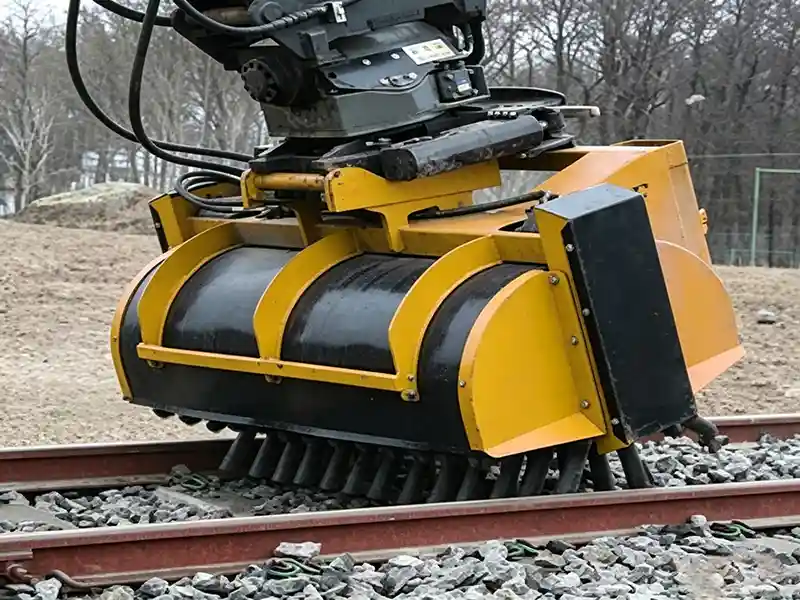
In the demanding world of bulk material handling, efficiency and safety are inextricably linked. Iron ore sites—spanning from pit mining operations and automated rail wagon loading stations to massive port stockyards—rely heavily on rail-mounted heavy machinery. Stacker reclaimers, ship loaders, and gantry cranes move thousands of tons of material daily. However, the very nature of handling iron ore creates a hostile environment for the rails these colossal machines travel upon. To maintain operational continuity and prevent catastrophic equipment failure, deploying a specialized rail sweeper on Iron Ore site operations is no longer a luxury; it has become an engineering necessity
The Hostile Rail Environment of Iron Ore Operations
Unlike standard industrial rail corridors, the tracks at an iron ore facility face a relentless barrage of heavy, abrasive debris. Understanding the exact nature of this contamination explains why standard, off-the-shelf cleaning solutions routinely fail.
1. Severe Iron Ore Spillage
Material loss is an inherent challenge in high-volume bulk handling. Iron ore fines and highly abrasive pellets frequently spill onto the tracks from conveyor transfer points, during high-velocity rail wagon loading, and along the travel paths of ship loaders.
When these hard chunks and fines settle on the rail head, they create an uneven track profile. As a multi-ton crane wheel passes over a single misplaced pellet, it experiences localized contact stress. Over time, this leads to wheel climbing risks, severe rail misalignment, and accelerated rail wear that can warp the track infrastructure.
2. Highly Abrasive Dust Buildup
Iron ore dust is exceptionally fine and dense. Under the immense wheel loads of stacker reclaimers, this dust does not simply blow away; it becomes highly compacted, forming a slick, rock-hard layer on the rail surface.
During dry periods, this dust reduces crane wheel traction and drastically increases braking distances. When ambient moisture or dust suppression sprays mix with this fine dust, it transforms into an aggressive, abrasive grinding paste. This paste acts like liquid sandpaper, rapidly grinding down wheel flanges and destroying the structural profile of the rail head.
3. The Slurry Dilemma: Water Meets Ore
Open-cast mines and coastal ports are constantly exposed to environmental elements. Rainwater, washdown procedures, and localized dust suppression systems inevitably introduce water to the iron ore fines. The resulting iron ore slurry is uniquely problematic. It is heavy, sticky, and fills the guide grooves of the tracks. Left unchecked, this sludge cakes onto fasteners, accelerating corrosion and causing abnormal, uneven wear on basic sweeping components.
Engineering Value: How a Specialized Rail Sweeper Protects Assets
Implementing a heavy-duty rail sweeper on Iron Ore site machinery acts as a critical line of defense. Mounted directly ahead of the crane wheels on the end beam or under the trolley frame, these systems deliver measurable operational advantages.
| Operational Challenge | Rail Sweeper Mitigation | Asset Lifecycle Benefit |
| Pellet & Chunk Spillage | Continuous mechanical clearing ahead of the wheel contact zone. | Prevents rail head indentation and eliminates derailment risks. |
| Compacted Dust Film | Aggressive brushing and scraping action to maintain metal-to-metal contact. | Maximizes wheel traction, stabilizes braking, and reduces flange wear. |
| Iron Ore Slurry Caking | Targeted scraping and fluid displacement. | Prevents groove clogging and protects track fasteners from corrosive moisture traps. |
| Secondary Dust Generation | Captures or consolidates fines rather than allowing them to be crushed and aerosolized. | Supports environmental dust control compliance and improves site visibility. |
Architectural Breakdown of Mining-Grade Rail Sweepers
Because iron ore is both heavy and highly abrasive, a standard rubber wiper will disintegrate within days. Site engineers must select a rail sweeper design tailored to their specific material profile.
Brush Type Rail Sweepers
Ideal for dry processing environments where fine dust accumulation is the primary threat. These systems utilize heavy-duty wire or dense, high-tensile nylon brushes. They provide continuous sweeping action, reaching into the micro-texture of the rail head to maintain optimal traction.
Scraper Type Rail Sweepers
When dealing with run-of-mine ore, spilled pellets, or heavily compacted crusts, a mechanical scraper is required. These systems feature heavy polyurethane blades backed by a rigid manganese steel bracket. The blade delivers a high pushing force, shearing compacted material off the steel track before it can reach the wheel.
Combination Rail Sweepers
For the vast majority of bulk material terminals, a hybrid approach yields the best results. A front-mounted polyurethane scraper first dislodges large debris and chunks, while a trailing wire brush sweeps away the remaining fine particles and dust. This dual-action design is highly recommended for variable weather environments.
Critical Application Hotspots Across the Supply Chain
The deployment of a rail sweeper on Iron Ore site machinery is particularly critical in four distinct zones:
- Port Stockyards & Ship Loading Terminals: Ship loader rails and quay crane tracks run directly parallel to the water, where high humidity combines with loading spillage to form a constant layer of corrosive sludge.
- Stacker Reclaimer Travel Rails: These tracks extend for kilometers through open stockyards. Because they are completely exposed to crosswinds and falling material from stacker booms, they suffer from the highest volume of continuous dust and pellet spillage.
- Wagon Loading Stations: The localized area beneath automated train loading chutes experiences severe, concentrated material drops during rapid car filling, requiring aggressive, continuous clearing.
- Conveyor Transfer Areas: Tripper cars and conveyor discharge points are prone to localized tracking issues, causing fines to shed continuously onto nearby ground rails.
Technical Specifications for Mining Procurement
When specifying a rail cleaning system for harsh mining environments, reliability comes down to engineering details. Procurement teams should evaluate systems based on the following criteria:
Pressure Adjustment Systems
A rail sweeper cannot rely on gravity alone. Due to the density of iron ore, systems must feature adjustable mechanical or spring-loaded tensioning assemblies. Higher contact pressure ensures the scraper cuts through hardened iron ore crusts rather than riding over them.
Materials Engineered for Longevity
Every component must resist both impact and abrasion. Brackets should be fabricated from manganese steel or heavy galvanized steel to prevent structural twisting when striking large ore chunks. Fasteners must be heavily galvanized or made of high-grade stainless steel to resist the corrosive effects of damp iron ore slurry.
Maintenance-Friendly Design
In a 24/7 mining operation, downtime is incredibly costly. The best rail sweepers utilize modular, quick-change wear parts. The polyurethane blades and brush segments should be replaceable with standard hand tools, minimizing scheduled maintenance windows.
Conclusion
The presence of uncontrolled iron ore spillage and dust introduces unnecessary risk into bulk material logistics. From accelerated wheel wear to catastrophic derailments, the costs of ignoring track contamination are unacceptably high. Integrating a purpose-built rail sweeper on Iron Ore site machinery protects expensive rolling stock, stabilizes braking performance, and keeps critical infrastructure moving safely. For modern, high-throughput mining operations, it is a small mechanical investment that yields massive dividends in operational uptime.