
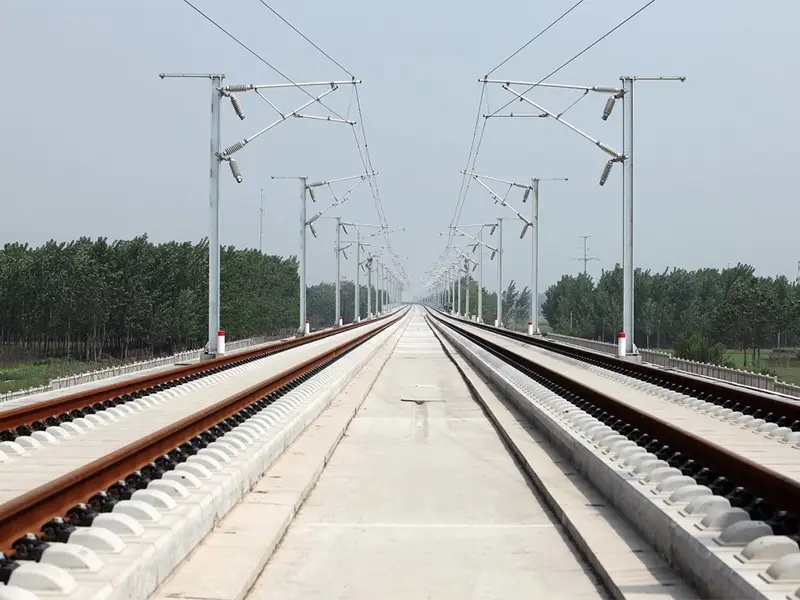
A train track and a high-speed railway track may look similar on the outside – but they have fundamental differences in design, steel grades and performance requirements. The selection of the appropriate track is not only about the cross-sectional weight (for example, 50kg/m vs.60kg/m); It also involves how to match materials science with operational requirements – from heavy-duty freight corridors to trunk lines running at 350 kilometers per hour. Accurately grasping each specification can optimize safety performance, durability and the cost throughout the entire life cycle.
Core Differences at a Glance
| Aspect | High-Speed Train Track | Conventional Train Track |
|---|---|---|
| Track Form | Ballastless Track (Slab Track) | Ballasted Track |
| Design Goal | Maximum stability, smoothness, and speed. | Cost-efficiency, adaptability, and easier maintenance. |
| Typical Use | Dedicated passenger lines (250+ km/h). | Mixed passenger and freight, heavy haul lines. |
| Speed | 250 – 350+ km/h | Usually under 200 km/h |
| Smoothness | Very high. Uses long welded rails and large curve radii. | Good. Uses jointed or welded rails with smaller curves. |
| Construction Cost | High initial investment. | Lower initial cost. |
| Maintenance | Low routine upkeep. Requires specialized equipment for repair. | Frequent maintenance needed. Can be adjusted manually. |
Detailed Technical Comparison
1. Track Structure: Ballastless vs. Ballasted
The base layer is the key difference.
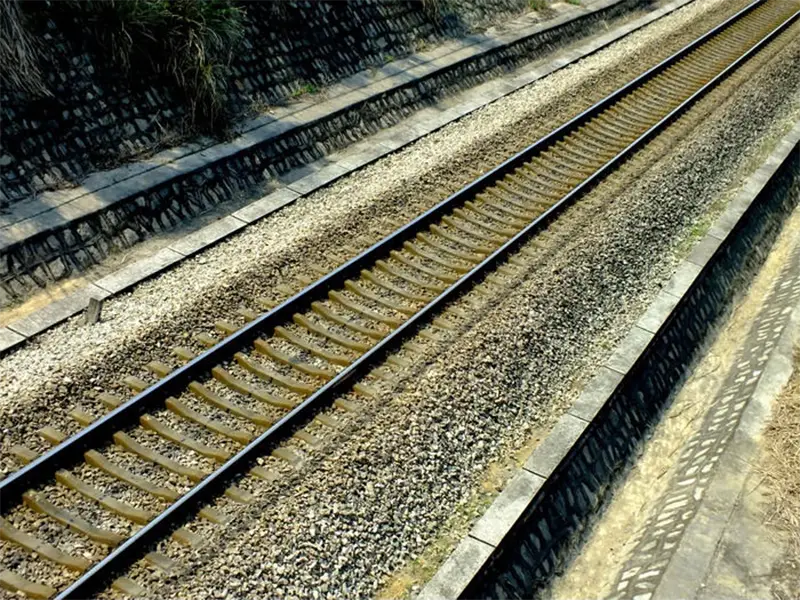
- Ballasted Track: Uses crushed stone (ballast) under the sleepers. This stone provides drainage, shock absorption, and allows for track adjustment. It can shift under heavy use, requiring regular maintenance.
- Ballastless Track: Uses a solid concrete or asphalt slab. This slab creates an extremely stable and level base. It prevents track movement and eliminates flying ballast. This design is essential for high-speed safety and comfort.
2. Rail and Design Specifications
- Rail Quality: High-speed lines require premium, heavier rails. These rails, like 60E1 or 75kg/m grades, offer greater strength and wear resistance.
- Long Welded Rails: Both types use them, but standards are higher for speed. Seamless rails reduce vibration and noise for a smoother ride.
- Alignment: High-speed track geometry uses very gentle curves and slopes. This is vital for stable travel at high velocities.
3. Cost and Maintenance Over Time
- High-Speed Track: Costs more to build. Its robust design needs less daily upkeep. However, repairs are complex and require specific machinery.
- Conventional Track: Cheaper to install. It needs regular, labor-intensive maintenance like tamping and ballast cleaning. This keeps it in good shape for varied traffic.
International Standards and Selection Advice
Most modern networks, including China’s, use standard gauge (1435mm). However, rail standards vary globally (e.g., EN in Europe, AREMA in North America).
Key factors for your rail project:
- Project Purpose: Is it for speed, heavy haul freight, or mixed traffic?
- Load & Environment: Consider axle weight, total traffic, and climate.
- Total Lifecycle Cost: Balance the initial investment with long-term maintenance expenses.
- Compliance: Rails must meet local or project-specific technical specifications.
Conclusion
Selecting the correct train track system is a foundational decision. High-speed track offers peak performance for passengers. Conventional track provides versatile and economical service. Your choice should match your project’s specific needs for decades to come.
Glory Rail supplies premium steel rails to global standards and provides expert technical support for your project’s specific requirements.