

One of the biggest safety hazards for railroad operations in the winter is rail fracture. Steel rails undergo more thermal contraction and a reduction in material toughness when the surrounding temperature drops. A greater frequency of breakage results from the brittleness of parts such rails, frogs, switch rails, fishplates, and bolts. Internal tensile stress increases concurrently with decreasing rail temperature, especially on continuous welded rail (CWR) and lengthy CWR sections with small expansion gaps. The likelihood of rail fracture rises dramatically when thermal stress, dynamic train loads, and welding or material flaws are coupled.
For this reason, winter rail fracture prevention must be treated as a priority in track maintenance. A preventive and proactive approach is essential to reduce fracture occurrences and ensure safe railway operations.
1. Winter Preparation: Eliminating the Root Causes of Rail Fracture
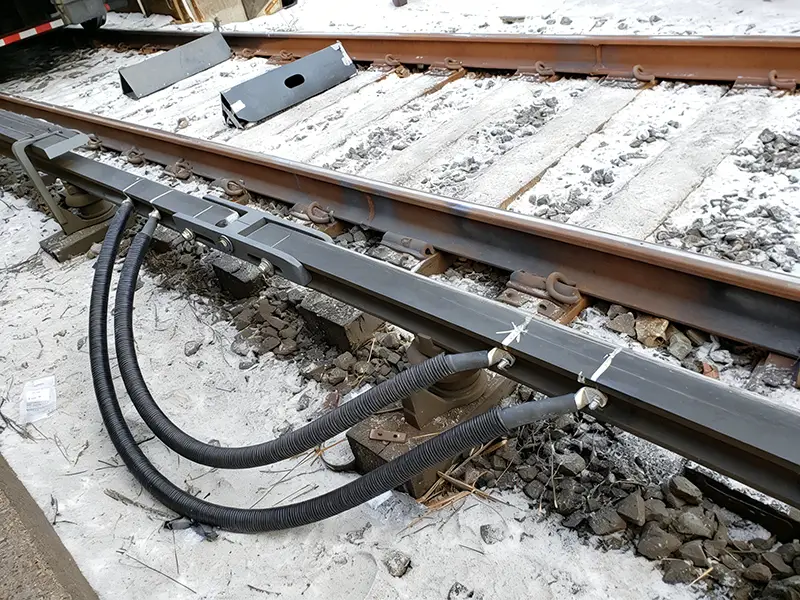
1.1 Comprehensive Joint Defect Treatment
One of the areas most susceptible to rail fracture is the rail joint. Fishplate fractures, rail end breakage, and bolt hole cracks are mostly caused by joint-related problems. Joint faults should be thoroughly addressed before winter by making effective use of restricted maintenance windows. Eliminating mud pumping, fixing rail spalling and settlement, fixing crushed rail ends, and reestablishing appropriate support conditions are important steps.
The repair length cannot go past the second bolt hole when welding joints. It is necessary to fix faulty sleepers, large rail gaps, fractured fishplates, excessively thick joint pads, and loose or misaligned fasteners. Strict specifications for tightness, contact, alignment, and load transfer should be met by joint bolts and fasteners.
1.2 Retightening Bolts to Specified Torque
Within the rail neutral temperature range of CWR, all fasteners and buffer zone joint bolts must be fully retightened before winter. Torque-controlled tools should be used, particularly for MG bolts. Vertical bolt torque should reach at least 120 N·m, while joint bolt torque should reach approximately 900 N·m. Insufficient bolt preload is a major contributor to winter rail fracture and must not be overlooked.
1.3 Rail Gap Adjustment and Rail Replacement
Based on autumn inspection results and recent temperature changes, rail gaps must be carefully adjusted. Large gaps should be corrected through rail shifting where possible; otherwise, rail replacement is required. Relying on chance is unacceptable in winter maintenance.
Rails with excessive side wear, severe vertical wear, deep surface damage, poor weld repair quality, or incomplete ultrasonic testing penetration must be replaced. Worn rails with reduced cross-sectional area have significantly lower fracture resistance and pose a high risk of rail fracture under winter tensile stress.
2. Special Attention Areas: Turnouts, Yards, and Industrial Lines
2.1 Turnouts and Large Yard Areas
Turnouts in large stations are subject to frequent shunting operations and accelerated component aging, making them high-risk areas for rail fracture. Defective frogs, switch rails, and lead rails must be repaired immediately. Overdue turnouts and switch zones require special attention to ensure sound sleepers, proper geometry, no suspended sleepers, and complete, effective components.
2.2 Station and Industrial Tracks
Station tracks and industrial sidings often receive less attention but are equally susceptible to winter rail fracture. Regular inspections and timely repairs are essential to prevent fracture incidents in these areas.
2.3 Temporary Short Rails and Insulated Joints
Temporary short rails inserted during construction must be permanently treated before winter. Ordinary bonded insulated joints within CWR, as well as frozen or under-torqued fishplates, must be upgraded to permanent solutions to eliminate hidden risks.
3. Weld Quality and Stress Management
Rail fracture on CWR almost always occurs at welds or within the heat-affected zone adjacent to welds. Therefore, weld integrity is a critical focus area.
3.1 Causes of Weld-Related Rail Fracture
Common causes include internal weld defects, fatigue accumulation, low fracture toughness, weld surface irregularities, and excessive rail neutral temperature. Poor track support near welds, such as voids, hanging sleepers, or uneven tamping, increases impact forces and accelerates fracture initiation.
3.2 Preventive Measures for Weld Fracture
Improving welding quality is fundamental. Strict compliance with welding and bonding procedures, followed by timely ultrasonic testing, is mandatory. Weld surface irregularities must be ground and repaired to restore smooth load transfer.
Track structure quality around welds must be maintained to prevent voids and uneven support. Rail creep should be controlled, and displacement monitoring should be strengthened. Where excessive tensile stress is detected, stress relief or rail neutral temperature adjustment must be carried out during approved maintenance windows.
4. Targeted Inspections of Weak Locations
During winter, focused inspections should be conducted at known weak points. All fishplates should be visually inspected, and any cracked components replaced immediately. Welds reinforced with bulged fishplates must be dismantled for inspection according to testing plans. Manual ultrasonic and visual inspections should be applied to special joints, insulated joints, and transition sections between different rail profiles.
Bolt holes at frogs, switch rails, and stock rails should undergo selective bolt removal and inspection for hidden cracking. Rails with severe corrosion, wave wear, surface micro-cracking from improper repair methods, or extensive crushing must be replaced without delay.
Conclusion
When its underlying causes are recognized and addressed, rail fracture is a predicted and avoidable winter danger. Rail fracture can be considerably decreased with careful pre-winter maintenance, stringent joint and weld quality control, accurate bolt torque management, and focused inspections of high-risk regions. The best method for guaranteeing track safety and operating dependability in the winter is still a methodical, preventive maintenance approach.