
As high-speed rail systems keep expanding, the quality of rail welding plays a big role in how safe and smooth the ride is. This article breaks down the most common welding methods used today—what they’re good at, where they fit in, and what to watch out for—along with some practical tips to help improve welding quality and keep things up to standard.
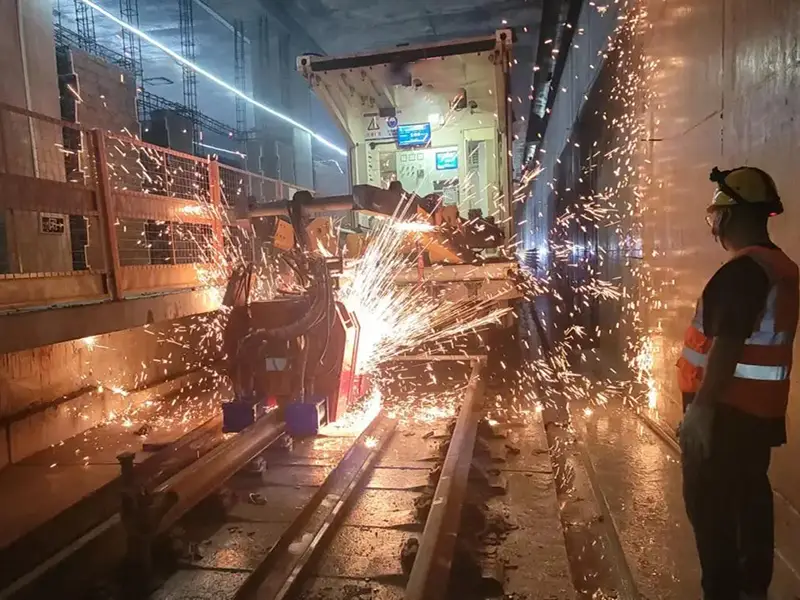
🛠️ Common Welding Methods for High-Speed Rails
🔥 Thermit Welding
This method uses a chemical reaction between aluminum powder and metal oxide to generate enough heat to fuse rail ends together.
Key Features:
Simple and low-cost
Can be done on-site without moving the rail
The weld has a cast structure, so it’s not as strong
Highly sensitive to temperature, weld gap size, and operator skill
Best For:
Tight spaces or emergency repairs.
Common Defects & Causes:
Shrinkage cavities – from uneven heating, too much preheating, or poor control of molten steel
Porosity – caused by poor preheating or unclean rail gaps
Blowholes – due to trapped gas, bad sand mold quality, or dirty rail ends
Slag inclusion – often from poorly sealed molds, oversized gaps, or insufficient molten steel
💨 Gas Pressure Rail Welding
This technique uses an oxy-acetylene flame to heat the rail ends until they’re soft or melted, then presses them together under force.
Key Features:
Energy-efficient, fast, and delivers solid welds
No need to reposition the rail
Demands very clean rail ends and precise gas mix
Temperature spread can be uneven, affecting smoothness
Equipment Update:
Large CNC pressure welding machines help improve strength and automation—but they still rely on flame control.
Best For:
Situations where rails are under tension during welding.
⚡ Flash-Butt Welding
Uses high electrical current to resistively heat the rail ends until molten, then forges them together while pushing out impurities.
Key Features:
High and consistent weld quality
Highly automated, good for both factory and field use
Uses a lot of power and is more expensive
On-Site Tips:
Use roller-type sliding gear to cut down friction
Gently bend rail ends (rail bending method) to improve alignment and reduce stress
Add about 0.2 mm pre-camber to prevent joint sinking
📈 How to Improve Weld Quality
✅ Pick the Right Welding Method
Think about what’s proven, what fits the situation, and what’s cost-effective
Go with automated options when possible—they’re more consistent
Run small tests first to check weld strength and quality
Set clear standards for settings and monitoring; track data in real time
✅ Step Up Inspection & Training
Use non-destructive testing like ultrasound or magnetic particle inspection
Test mechanical properties like strength and stretch
Train welders regularly, keep them certified, and get them to industry events to stay current
✅ Manage the Welding Process Carefully
Use good insulation materials and test insulation performance before welding
Follow rail layout drawings—mark weld spots and parameters clearly
Supervise on-site work and log key info like time, current, voltage, and forging force
Set up a feedback system, hold debriefs, and keep improving methods and management
🎯 Wrapping Up
Thermit, gas pressure, and flash-butt rail welding each have their own strengths and ideal uses. Picking the right one for the job—plus solid process control, trained people, and strict quality checks—is what it takes to keep high-speed rail tracks safe, stable, and running smooth.